 Lahore 23°C
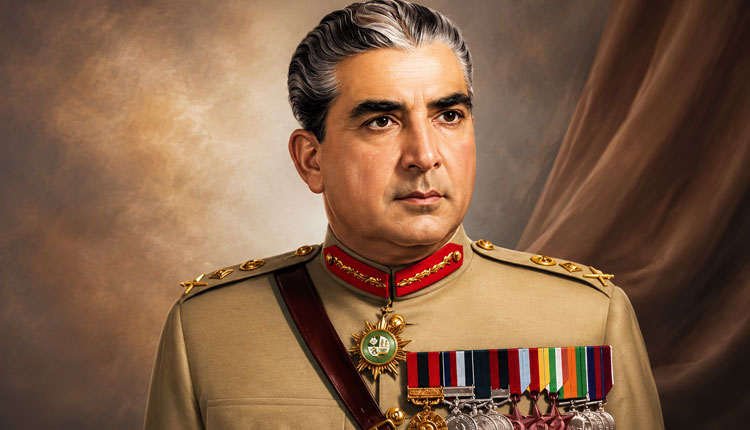
End of the Ayub Era and General Yahya Khan’s Rise to Power: The Beginning of the Second Martial Law
The political crisis in Pakistan intensified during the final months of Field Marshal Ayub Khan’s rule. In East Pakistan, Governor Monem Khan’s strict measures continued, while Sheikh Mujibur Rahman and 35 others were accused of conspiring to separate East Pakistan from Pakistan through an armed uprising. The case, known as the Agartala Conspiracy Case, was initiated in June 1968.
In West Pakistan, the anti-government protest movement continued to gain momentum despite efforts by Governor-General Muhammad Musa to ease tensions. By November 1968, the movement had become increasingly intense. Lawyers, doctors, students and people from different sections of society took to the streets and demanded Ayub Khan’s resignation. Even Ayub Khan faced an assassination attempt while addressing a public gathering in Peshawar.
As the government realised that its efforts to contain the protest movement were failing, political leaders were released from detention and opposition parties were invited to participate in a Round Table Conference in Rawalpindi. The opposition, however, had formed the Direct Action Committee and made the withdrawal of the emergency a precondition for taking part in the talks.
On 14 February 1969, the opposition announced a nationwide strike. Several rallies were held across the country, with clashes between protesters and police leaving many people injured. Zulfikar Ali Bhutto, who was still under detention, went on a hunger strike and demanded the immediate lifting of the emergency.
The government eventually announced the withdrawal of the emergency on 17 February 1969, leading to Bhutto’s release. Following the decision, the Direct Action Committee agreed to participate in the Round Table Conference. However, the Pakistan Peoples Party, Awami League and National Awami Party initially declined to attend.
Before the conference, the committee demanded the release of Sheikh Mujibur Rahman so that he could also participate in the political process. Sheikh Mujib was subsequently released on parole and agreed to attend the conference. However, tensions escalated after one of the accused in the Agartala case was shot dead on suspicion of attempting to escape.
His funeral procession turned into a large public gathering as an angry crowd joined the procession. The situation quickly deteriorated, and unrest spread across East Pakistan. In Dhaka, Chittagong and Noakhali, police opened fire on protesters, resulting in nine deaths and 51 injuries.
Sheikh Mujibur Rahman then announced that he would not participate in the Round Table Conference unless the Agartala Conspiracy Case was withdrawn.
On 21 February 1969, Ayub Khan announced that he would not contest the next presidential election. On 22 February, the ordinance under which Sheikh Mujib and his associates were being tried before a tribunal was withdrawn. Sheikh Mujib was released and later participated in the Round Table Conference.
During the conference, Ayub Khan agreed in principle to retain a parliamentary system of government, with elections to the assemblies held directly on the basis of adult franchise. Following this development, Nawabzada Nasrullah Khan announced the dissolution of the Direct Action Committee.
Sheikh Mujibur Rahman, however, separated from the joint opposition, arguing that it had not supported his demands for greater regional autonomy and the abolition of the One Unit system.
Ayub Khan also replaced his governors in an effort to reduce tensions. Despite these measures, unrest continued in East Pakistan. Between 10 and 20 March, 39 people were reportedly killed in Dhaka, while several incidents of looting and arson were also reported.
The appointment of new governors brought some improvement, and the protest movement gradually began to lose momentum. However, the political crisis remained unresolved.
Then, on 25 March 1969, Field Marshal Ayub Khan announced his resignation and handed over power to Army Commander-in-Chief General Yahya Khan, bringing the Ayub era to an end.
General Yahya Khan subsequently imposed martial law and took control of the country. He declared himself the Chief Martial Law Administrator and later assumed the office of President of Pakistan.
The transfer of power marked the beginning of Pakistan’s second period of military rule and another major turning point in the country’s political history.