 Lahore 23°C
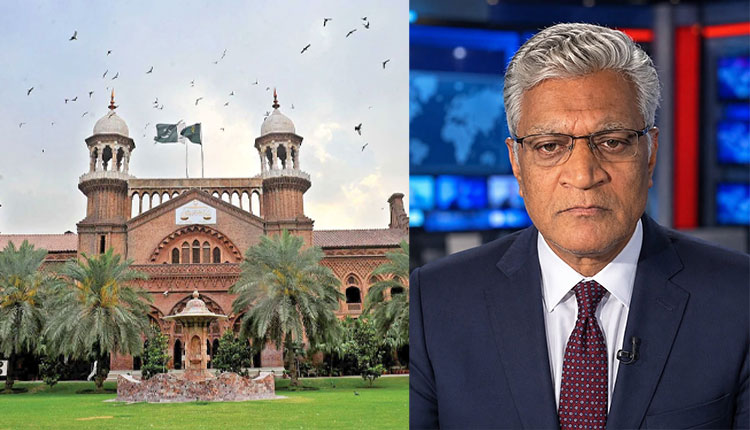
MULTAN: (Rashid Habib) In a landmark judgment, a Division Bench of the Lahore High Court (Multan Bench) has ruled that the Federal Board of Revenue (FBR) cannot randomly select taxpayers for audits at will, establishing that a strict chronological sequence must be followed under Section 25 of the Sales Tax Act, 1990.
The 17-page verdict, authored by Justice Jawad Hassan alongside Justice Abid H. Chatta, was issued in favor of M/s JK Sugar Mills (Pvt.) Limited—a company owned by former MNA and JDW Group founder Jahangir Khan Tareen. The court successfully set aside the FBR's audit selection and record-access notices dating back to March 2017.
The Core Legal Dispute
The case arose when the Commissioner Inland Revenue notified JK Sugar Mills on March 3, 2017, that its case had been selected for an audit. Three days later, on March 6, 2017, the Deputy Commissioner directed the company to produce its financial records.
Representing the sugar mill, Advocate Malik Ahsan Mahmood argued that the FBR cannot use Section 25 as an independent shortcut to pick and choose taxpayers for audit. He maintained that official, random selections are strictly governed under Section 72B, which mandates a transparent computer ballot system.
The Court’s Direct Interpretation
The High Court framed two pivotal constitutional questions regarding whether the Commissioner possesses unfettered discretion to select taxpayers "as and when desired." Striking down the FBR's actions, the bench clarified two critical points:
Mandatory Order of Steps: Sub-sections (1) and (2) of Section 25 are deeply intertwined. The FBR must first invoke sub-section (1) to legally call for a taxpayer's records. An audit under sub-section (2) can only be initiated on the basis of the records already obtained. By selecting the case first and demanding records later, the Commissioner reversed the legal order to justify a pre-determined decision.
No Room for "Fishing Expeditions": The bench noted that the statutory phrase "as and when required" offers procedural flexibility regarding timing, but it does not grant unguided power to launch arbitrary, roving inquiries against businesses.
The Ultimate Precedent
Invoking historical Supreme Court rulings—including Pakistan Beverages Limited (2018)—the bench reiterated that administrative discretion must be fair, rational, and fully reasoned. The court declared that any future tax audit initiated under Section 25 must be backed by a clear, speaking order explaining precisely why it is necessary outside of the standard computer ballot system.
Consequently, the court allowed the petition, nullifying the FBR's high-handed notices.