
 Lahore 22°C
 Karachi 26°C
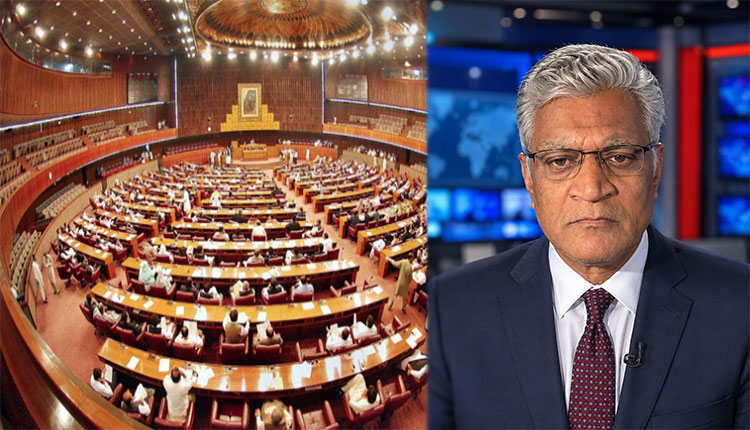
True statehood cannot survive on absolute power or arbitrary decisions; it requires a highly structured, legal, and institutional frame where the rulers remain directly accountable to the governed. By exploring the core foundations of public administration, structural equity, and systemic transparency, this analytical text explores the precise mechanisms that separate constitutional democratic governance from administrative despotism.
1. The Origin and Linguistic Meaning of Governance
The word governance, much like government, traces its etymology back to the Greek word "kubernáo", which fundamentally means to control a direction, to guide, or to move something along a particular course. Historically, the term was first adapted by the philosopher Plato to describe government phenomena, later entering the English language through the old French word gouvernance.
Standard lexicon authorities define the concept as follows:
- Cambridge Dictionary: The way organizations or countries are managed at the highest level, and the systems for doing this.
- Oxford Dictionary: The action or manner of governing a state, organization, etc.
- Webster's International Dictionary: A synonym for government, specifically highlighting the "act or process of governing, specifically authoritative direction and control."
- Core Academic Definition: Governance ultimately determines who holds power, how collective choices are executed, how other players make their voices heard, and how accountability is rendered.
2. The Analytical Framework of Goran Hyden
Political scientist Goran Hyden famously elevated governance to an "umbrella concept" within comparative politics to address analytical gaps left by traditional institutional descriptions. Hyden defines governance through five central characteristics:
1. It is a conceptual approach that frames a macro-level comparative analysis of politics.
2. It addresses foundational questions of a "constitutional" nature that establish rules of political conduct.
3. It involves creative intervention by political actors to change structures that inhibit human potential.
4. It emphasizes the structural interactions between the state and social actors.
5. It refers to socially sanctioned, non-arbitrary relationships among political actors.
3. The Nine Pillars of Good Governance
As recognized globally by the World Bank, UNDP, and the Asian Development Bank (ADB), sustainable development cannot exist without a specific set of operational characteristics. The nine core traits include:
Participation: The formal or informal involvement of citizens in public choices. This can be achieved either directly (via tools like public referendums) or indirectly through elected representatives in parliament.
Rule of Law: The maintenance of a fair, impartial, and effective legal system that safeguards human rights, protects minorities, and ensures an independent judiciary. It functions as the ultimate shield against despotism, absolutism, authoritarianism, and totalitarianism, ensuring that governing officials remain subject to existing laws as much as ordinary citizens.
- Transparency: The free availability and accessibility of information to those affected by public decisions. Originally emerging from corporate financial models, transparent processes curb corruption and allow public interest to be clearly distinguished from private interest.
- Equity: The structural assurance that a legal system treats people fairly, serving as a rectification of rigid or overly literal interpretations of law.
- Effectiveness: The institutional capacity to ensure that strategic public goals are met and match desired performance levels, particularly within crucial public service sectors like healthcare and education.
- Efficiency: The optimization of public resources to achieve the maximum possible output with minimal expenditure of time, inputs, or financial costs.
- Accountability: A cornerstone of good governance that ensures actions, policies, and decisions taken by public officials are strictly subject to oversight, responding directly to the needs of the community.
- Strategic Vision: The long-term perspective maintained by leaders to successfully adapt to changing environments, focusing heavily on human development and structural models over several years.
- Responsiveness: The capacity of governing institutions to serve the entire community while balancing competing interests in a timely, appropriate, and sensitive manner.