 Lahore 17°C
 Karachi 25°C
When the System Collapses: Pakistan’s Crisis of Governance, Responsibility and Social Values
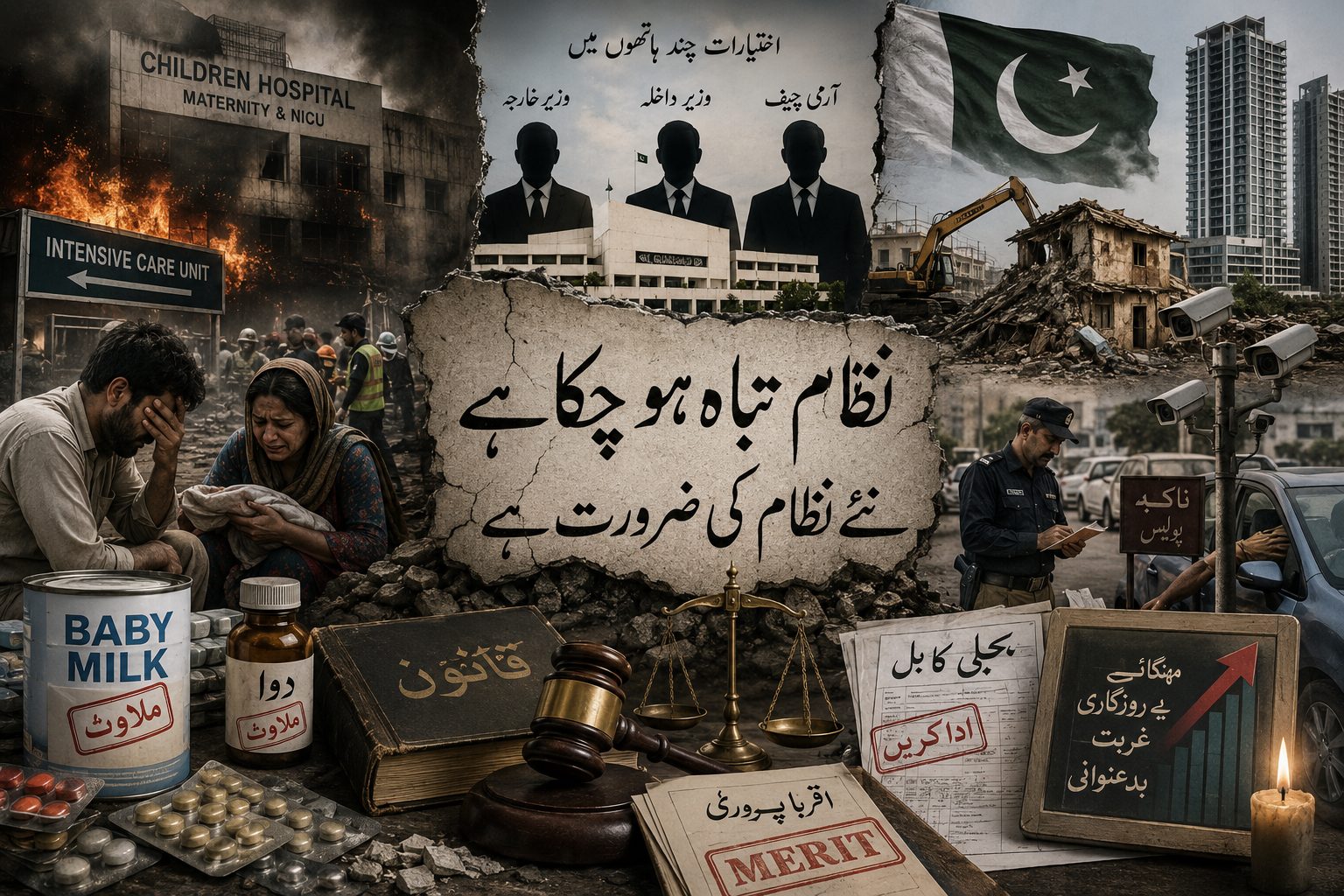
There is no remote district, backward town or forgotten village here. This is the federal capital, Islamabad. Its principal public hospital has a dedicated children’s block, effectively functioning as a separate hospital, a facility built with Japanese assistance. Yet if a fire breaks out in the nursery for newborn babies, reportedly killing 14 infants, one is forced to ask a painful question: what exactly has gone wrong with the system?
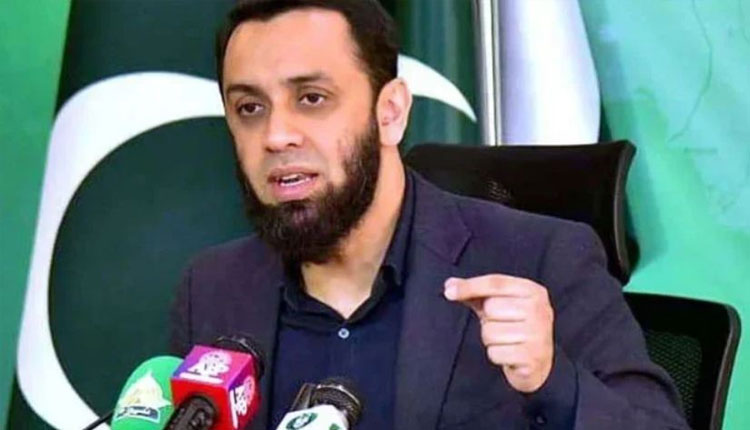
I may have a thousand disagreements with Interior Minister Mohsin Naqvi, but on one point I find myself compelled to agree with him: the system has collapsed.
And it is not merely the system that appears to be failing. The social fabric itself seems to have become so tangled and damaged that it resembles the string of a broken kite—twisted, fragmented and seemingly impossible to restore to its original form.
The world can provide us with buildings, equipment, technology and modern facilities. It can help us construct hospitals, schools and laboratories. But no foreign country can manufacture a sense of responsibility, ethics, discipline, civility and compassion for us. Those qualities have to be cultivated within society.
Unfortunately, dishonesty, negligence, corruption and hypocrisy appear to have become deeply embedded in everyday life. From children's milk to medicines for patients, consumers frequently question whether what they are buying is genuine and safe. If decades have passed without effectively eliminating bribery and corruption, is that not evidence of institutional failure?
Consider the ordinary citizen who walks into a government office. Instead of receiving assistance, he may encounter an official who is unwilling even to speak politely, let alone resolve his problem. When a citizen cannot expect basic courtesy from a government clerk or a senior officer, what else should we call it except the deterioration of governance?
The situation becomes even more disturbing when a public hospital—an institution established to save lives—is accused of negligence that puts patients at risk. A doctor is supposed to be a healer, not someone whose negligence contributes to a patient's suffering or death. If people lose confidence in public healthcare, how can a country expect its citizens to feel secure, let alone persuade foreign investors and skilled professionals to build their future there?
The crisis extends beyond hospitals and government offices.
It is visible in the relationship between power and ordinary citizens. A poor person's home can be declared illegal and demolished, while powerful individuals and wealthy developers appear capable of constructing enormous projects with far greater influence. The contrast between the destruction of a poor man's shelter and the expansion of elite housing schemes raises fundamental questions about equality before the law.
Political governance also faces serious questions. When elected leaders appear constrained in exercising authority, and when political figures feel compelled to praise powerful institutions and personalities even during routine public appearances, the balance between civilian authority and institutional power becomes a matter of legitimate public debate.
Foreign and domestic policy should ultimately be governed through constitutional institutions, transparent decision-making and clearly defined responsibilities. A healthy state cannot function indefinitely through informal centres of power.
Meanwhile, ordinary citizens continue to face a daily struggle with inflation, electricity costs, fuel prices and unemployment. Families already struggling to survive can find themselves spending a substantial portion of their income on utility bills. When electricity shortages, rising fuel prices and declining purchasing power combine with industrial closures and shrinking business activity, the consequences extend far beyond economics. They affect families, education, health and social stability.
This is why the argument that Pakistan needs a new system resonates with many people.
But what kind of new system?
Certainly not one that merely divides the country into more administrative units while concentrating all meaningful authority in the hands of one individual. Changing the structure without changing the culture of governance would simply reproduce the same problems under a different name.
Pakistan needs a system in which the Constitution and law are supreme.
It needs a system in which merit replaces nepotism, accountability replaces impunity, competence replaces political loyalty, and public service becomes an actual responsibility rather than a privilege.
Hospitals need healers rather than negligent personnel. Schools need to teach children skills, critical thinking, ethics and responsible citizenship alongside academic knowledge. Educational and religious institutions must provide environments in which children are protected and treated with dignity.
Religion, too, should not be reduced to rituals performed within the walls of a mosque or religious institution. The real test of faith begins when a person walks back into society—when he deals honestly with another person, refuses to cheat, fulfils his responsibilities, respects the rights of others and stands against injustice.
The fundamental question, therefore, is not simply whether Pakistan needs a new political arrangement. It is whether Pakistan is prepared to rebuild the values that make any political system work.
A country can import technology, purchase machinery and build impressive infrastructure. It can construct modern hospitals and roads. But no government can manufacture integrity in a factory.
Institutions function when the people running them possess responsibility, competence and a commitment to the public good. Laws work when those enforcing them are themselves willing to respect them. Democracy works when political leaders accept accountability. And society progresses when citizens understand that their rights are inseparable from their responsibilities.
Pakistan's real crisis, therefore, may be deeper than the failure of a particular government or institution. It is a crisis of governance, accountability and social values.
The solution is not simply to replace one system with another. The solution is to build a system in which no one is above the law, no citizen is beneath dignity, merit matters, corruption carries consequences, and public institutions exist to serve the public.
That is the kind of transformation Pakistan needs—not merely a new arrangement of power, but a new culture of responsibility.
Because when the social fabric itself begins to tear, rebuilding the state requires more than new buildings and new slogans. It requires rebuilding trust, character, competence and the belief that the law applies equally to everyone.