 Lahore 20°C
As a result of rapid industrial development in the country, the unequal distribution of wealth began to increase. Gradually, the country’s wealth became concentrated in the hands of a few families in West Pakistan. It was commonly said that the entire wealth of the country had accumulated in the hands of 22 industrial families of West Pakistan.
As a result, the pace of development and prosperity was relatively faster in West Pakistan. Consequently, the people of East Pakistan began to blame these industrial families for exploitation and deprivation and launched anti-West Pakistan propaganda. The primary reasons behind this growing resentment were the economic and financial inequalities and disparities between the two provinces. Another important factor was that the Ayub government enjoyed the support of the armed forces, the majority of whose personnel belonged to West Pakistan.
The fundamental objective of martial law was to completely eliminate corruption and malpractices from the country, as Ayub Khan had declared. However, it was surprising to see that, contrary to these claims, corruption and malpractice reached their peak during Ayub Khan’s so-called constitutional government.
In fact, the system of Basic Democracies was considered one of the major causes behind this widespread corruption, as it encouraged corrupt practices throughout the country. There was also a perception that the government itself was encouraging the corrupt practices of these Basic Democrats. The reason was that the President of Pakistan was elected through the votes of these Basic Democrats.
At the same time, Ayub Khan’s policy of keeping the armed forces satisfied at all costs also gradually generated public resentment against him. Under this policy, members of the armed forces were given land, their salaries and pensions were increased, and they were also provided with employment opportunities even after retirement from military service.
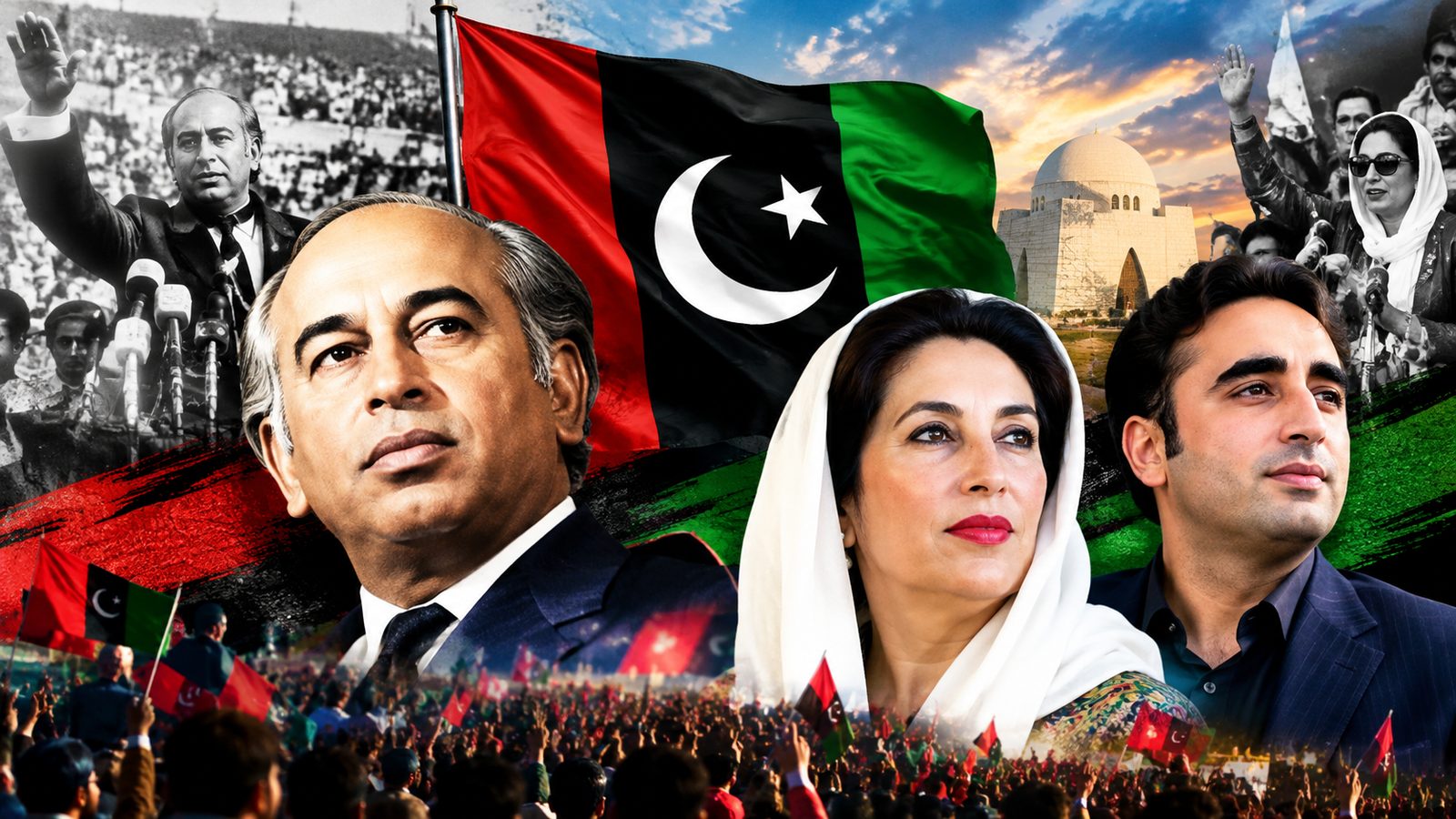
All these factors combined to create intense anger and resentment against the government. The entire country was experiencing a state of unrest and dissatisfaction. Meanwhile, in 1968, former Foreign Minister Zulfikar Ali Bhutto announced the formation of the Pakistan Peoples Party (PPP) and joined the movement against Ayub Khan with full force.
The opposition made the provincial governors and their alleged misuse of powers under the state of emergency its first major target. Consequently, all political parties jointly demanded the lifting of the emergency and formed a united political platform under the name of the United National Command.
Zulfikar Ali Bhutto’s Pakistan Peoples Party did not join this alliance. However, the PPP continued its campaign against the government, calling for the restoration of democracy and an end to the unjust and unequal distribution of wealth.
The growing economic disparity, political repression, corruption, concentration of wealth, and unequal treatment between East and West Pakistan ultimately intensified public dissatisfaction and contributed significantly to the political crisis that eventually challenged Ayub Khan’s rule.