 Lahore 27°C
 Karachi 30°C
 Islamabad 23°C
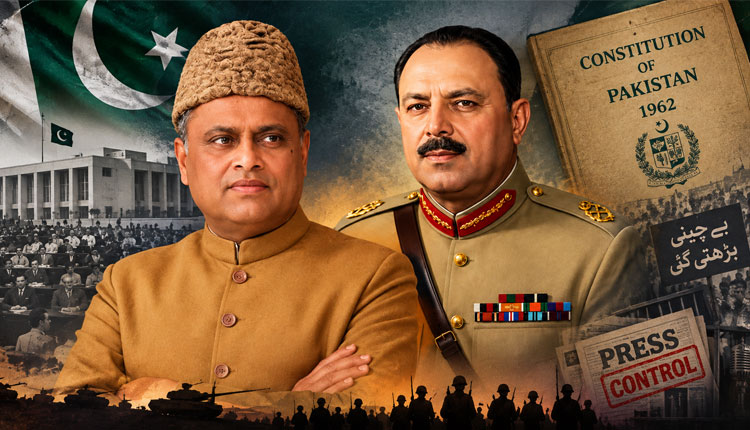
Former Chief Minister of East Pakistan Nurul Amin confirmed that even three years after the imposition of Martial Law, when no constitution could be framed for the country, a sense of deprivation began to emerge among the people of East Pakistan. Gradually, unrest continued to grow across the country.
President Ayub accepted the Constitutional Commission’s sole recommendation of a presidential system of government, but rejected its other proposals. These included an American-style presidential system based on a balance of powers, the establishment of a bicameral legislature, and the creation of an electoral body for the election of the assemblies, the President and the Vice President.
In 1962, General Ayub introduced a constitution that was neither truly presidential nor parliamentary, and it did not provide adequate protection for the fundamental rights of the people. The legislature was also not given effective and clearly defined powers through which it could exercise meaningful control over the country’s administration. Instead, almost all powers were concentrated in the person of the President.
The President was to be elected by 80,000 members of the Basic Democracies. Their primary role was to elect the President, and they were not even allowed to have a say in the budget. The provinces were also deprived of meaningful autonomy. Even the authority to appoint provincial ministers remained with the President.
As a result of this constitution and these measures, deep disappointment spread among the people of both provinces. Another major reason for this frustration was Ayub Khan’s earlier actions, which have already been discussed: the opposition was suppressed, political parties were banned, and under EBDO, politicians were declared ineligible for political activity for six years.
Furthermore, the Pakistan Publications Ordinance of 1963 was used to suppress an independent media, while the National Press Trust, established in 1964, brought the media under greater government control.