 Lahore 28°C
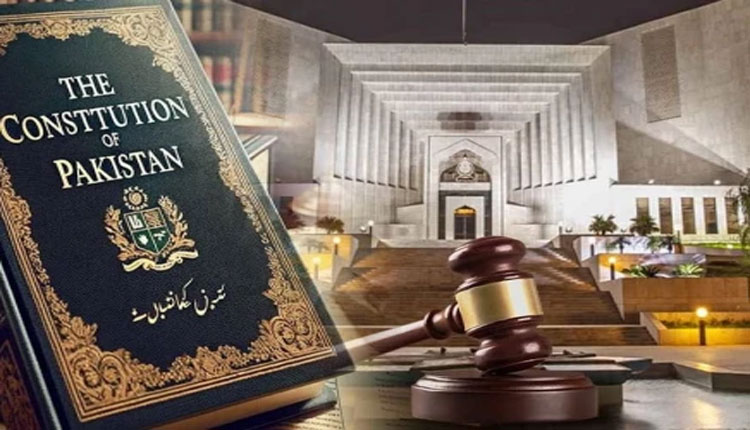
The Constitution of the Islamic Republic of Pakistan, enacted in 1973, contains a robust framework designed to protect individual liberties, promote social justice, and limit arbitrary state action. These constitutional guarantees are enshrined in Chapter 1 of Part II (Articles 8 to 28).
Under Article 8, any law passed by parliament or a provincial assembly that contradicts or dilutes these fundamental rights is automatically deemed null and void, giving the judiciary direct power to protect citizens.
1. Core Rights to Life, Liberty, and Fair Trial
- Security of Person (Article 9): No person can be deprived of life or liberty save in accordance with law. It guarantees protection from arbitrary physical harm or extrajudicial actions.
- Safeguards as to Arrest and Detention (Article 10): A person who is arrested must be informed immediately of the grounds for their arrest and has the right to consult and be defended by a legal practitioner of their choice. They must be produced before a magistrate within 24 hours of arrest.
- Right to Fair Trial (Article 10A): Introduced via the 18th Amendment, this guarantees that for the determination of civil rights or any criminal charge, a person is fully entitled to a fair trial and due process.
2. Protections Against State Cruelty and Slavery
- Slavery and Forced Labor Prohibited (Article 11): Slavery is explicitly forbidden. No form of forced labor (begar) or human trafficking is allowed. Crucially, children under the age of 14 cannot be employed in factories, mines, or any hazardous environments.
- Protection Against Retrospective Punishment (Article 12): A person cannot be punished for an act that was not illegal at the time it was committed, nor can they receive a penalty heavier than what was prescribed by law when the offense took place.
- Protection Against Double Punishment and Self-Incrimination (Article 13): No person can be prosecuted or punished for the same offense more than once, nor can anyone be compelled to give testimony against themselves.
- Inviolability of Dignity of Man (Article 14): The dignity of man and, subject to law, the privacy of home, are absolute. Most importantly, it declares that no person shall be subjected to torture for the purpose of extracting evidence.
3. Freedom of Movement, Assembly, and Expression
- Freedom of Movement (Article 15): Every citizen has the right to move freely throughout Pakistan and to reside or settle in any part of it, subject to reasonable restrictions imposed by law in the public interest.
- Freedom of Assembly (Article 16): Citizens have the right to assemble peacefully and without arms, subject to reasonable restrictions imposed by law in the interest of public order.
- Freedom of Association (Article 17): Every citizen has the right to form associations or unions. This also includes the right to form or be a member of a political party, subject to national sovereignty and integrity limitations.
- Freedom of Trade, Business, or Profession (Article 18): Citizens are free to enter upon any lawful profession or occupation, and to conduct any lawful trade or business.
- Freedom of Speech (Article 19): Guarantees freedom of speech and expression, alongside freedom of the press. This right is subject to reasonable restrictions regarding national security, public order, and decency.
- Right to Information (Article 19A): Grants every citizen the right to have access to information in all matters of public importance, subject to regulation and law.
4. Religious, Educational, and Property Rights
- Freedom to Profess Religion (Article 20): Subject to law and public order, every citizen has the right to profess, practice, and propagate their religion, and every religious denomination has the right to establish and maintain its institutions.
- Right to Education (Article 25A): The State is constitutionally mandated to provide free and compulsory education to all children aged five to sixteen years.
- Provision of Property Rights (Articles 23 & 24): Every citizen has the right to acquire, hold, and dispose of property in any part of Pakistan. No person can be deprived of their property save in accordance with law, and proper compensation must be provided if private property is acquired for public purposes.
5. Equality and Protection Against Discrimination
- Equality of Citizens (Article 25): All citizens are equal before the law and are entitled to equal protection of the law. It explicitly bars discrimination on the basis of sex alone, while allowing the state to make special provisions for the protection of women and children.
- Non-Discrimination in Public Places (Articles 26 & 27): Prevents discrimination based on race, religion, caste, sex, or place of birth regarding access to public places or appointment in the service of Pakistan.
- Preservation of Culture and Language (Article 28): Any section of citizens having a distinct language, script, or culture has the right to preserve and promote it.
The Current Real-World Context (October 2026)
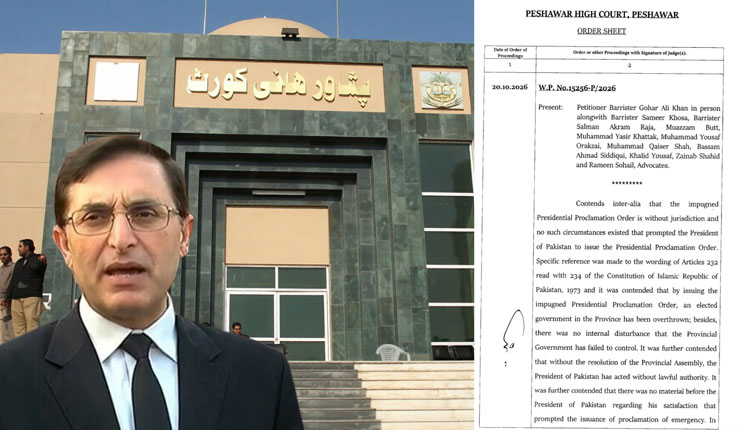
While these rights are absolute on paper, the legal realities in Pakistan frequently shift during times of administrative instability. For example, during a State of Emergency (under Article 232) or the invocation of Governor's Rule (under Article 234)—such as the recent political developments in Khyber Pakhtunkhwa—the federal executive holds the constitutional power to temporarily suspend the enforcement of certain operational fundamental rights (like freedoms of movement, assembly, and speech) to restore public order. However, core protections like the Right to Life (Article 9) and the Inviolability of Human Dignity (Article 14) remain legally untouchable.