 Lahore 21°C
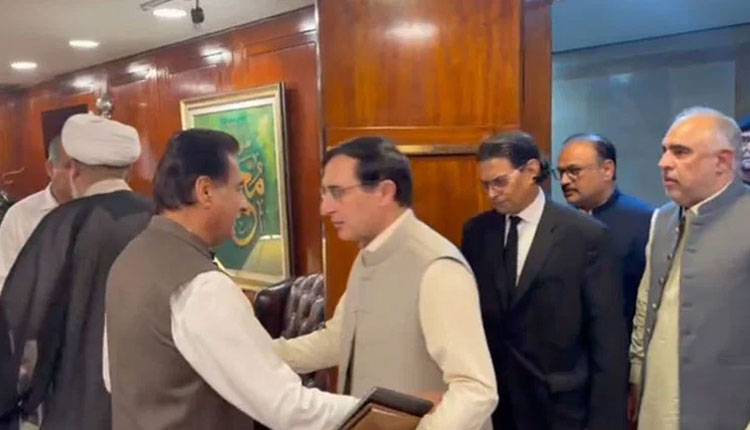
ISLAMABAD: The government and Pakistan Tehreek-e-Insaf (PTI) held talks in Islamabad, with senior leaders from both sides discussing the prevailing political and security situation, PTI’s demands and the planned October 4 long march.
PTI Chairman Barrister Gohar, Opposition Leader in the Senate Allama Raja Nasir Abbas, Asad Qaiser and Aamir Dogar participated in the talks. The government side was represented by Interior Minister Mohsin Naqvi, Prime Minister’s Adviser Rana Sanaullah, Talal Chaudhry, Ameer Muqam and Tariq Fazal Chaudhry, while Pakistan Peoples Party leaders Naveed Qamar and Sherry Rehman also participated in the negotiations.
Mohsin Naqvi Briefs Participants on KP Security
During the meeting, Interior Minister Mohsin Naqvi briefed the negotiating delegations on the security and terrorism situation in Khyber Pakhtunkhwa.
The security situation in the province and concerns surrounding the planned PTI protest were among the issues discussed during the talks.
PTI Presents Key Demands
According to sources, PTI put forward several demands, including the release of former Prime Minister Imran Khan.
The party also raised the issue of Imran Khan’s medical examination and sought the release of his sisters as well as detained members of the National and provincial assemblies.
The government, meanwhile, asked PTI to withdraw its call for the October 4 long march towards Islamabad.
PTI leaders have maintained that consultation with Imran Khan remains an important part of the party’s decision-making process.
Barrister Gohar: Talks Held in a Positive Environment
After the conclusion of the day’s negotiations, Barrister Gohar said the talks were held in a positive environment.
He said both sides had presented their respective positions and expressed hope that the dialogue would continue the following day.
“We have conveyed our demands to the government,” Barrister Gohar said, adding that the current negotiations were different from previous rounds of talks.
He said PTI continues to act according to the directions of its founder, Imran Khan.
PTI leader Salman Akram Raja also said the party remained firm on its demands.
Mohsin Naqvi and Rana Sanaullah Contact Prime Minister
According to sources, Interior Minister Mohsin Naqvi and Prime Minister’s Adviser Rana Sanaullah contacted Prime Minister Shehbaz Sharif by telephone following the negotiations.
The two officials briefed the prime minister on the progress made during the talks and also informed him about the demands presented by the opposition.
Negotiations Resume After Consultation
Another round of discussions between the government and opposition was also completed.
Following one phase of the talks, members of the government remained in the committee room while opposition representatives moved to the Speaker’s Chamber for internal consultation.
The government reportedly assured the opposition regarding implementation of a court decision, while opposition representatives decided to brief their respective leadership about the developments.
Break for Friday Prayers
The negotiations were temporarily suspended for around 15 minutes to allow participants to offer Friday prayers.
National Assembly Speaker Sardar Ayaz Sadiq and leaders from the government and PTI went to the Parliament Mosque for prayers.
Sardar Ayaz Sadiq: I Am Only Facilitating the Talks
Speaking during the session, National Assembly Speaker Sardar Ayaz Sadiq said he was only playing the role of a facilitator in the negotiations.
He expressed hope that the talks would succeed and said his office would remain open for efforts aimed at resolving political issues through dialogue.
Ayaz Sadiq said differences and political disputes should be addressed through negotiations, adding that positions and offices are temporary while Parliament remains a forum where political issues can be discussed and solutions can be explored.
Nasir Abbas: Details of Talks Will Remain Confidential
Senate Opposition Leader Allama Raja Nasir Abbas said the discussions held during the negotiations were confidential.
He said even major crises could be addressed through dialogue and stressed that resolving political crises was the responsibility of the government.
Nasir Abbas urged the government to demonstrate sincerity in finding solutions to the issues facing the country.
Barrister Gohar Calls for Meaningful Dialogue
Speaking to journalists outside Parliament, Barrister Gohar said imposing governor’s rule or an emergency would not resolve political issues.
He said PTI had consistently sought justice and expressed the hope that the negotiations would produce meaningful results.
According to Barrister Gohar, the dialogue should not be limited to a photo opportunity or formal meetings, adding that successful negotiations were important for the country.
Before the talks, he had said that PTI would enter the negotiations with sincerity and without imposing a precondition, listen to the government’s position and then present its own demands.
Talal Chaudhry: Opposition Should Not Miss Opportunity for Dialogue
Minister of State for Interior Talal Chaudhry said the government had never been reluctant to engage in dialogue.
He said the Pakistan Muslim League-Nawaz and Pakistan Peoples Party had historically addressed political issues through negotiations and expressed hope that the opposition would not miss the opportunity for dialogue.
He also urged political parties not to pursue positions that could further intensify existing problems.
Rana Sanaullah: Court Matters Will Be Settled in Courts
Prime Minister’s Adviser Rana Sanaullah said matters concerning the courts would be resolved through the judicial system, while political issues could be discussed at the negotiating table.
He said the government would respond according to political principles and the law.
Rana Sanaullah also said that writing a letter to the prime minister while refusing to meet him was not a constructive approach and argued that such thinking could affect political tolerance.
Tariq Fazal Chaudhry: Doors for Dialogue Remain Open
Federal Minister Tariq Fazal Chaudhry said the prime minister himself had invited the opposition leader for negotiations.
He said the government had kept the doors for dialogue open and would participate in the talks with positive expectations.
According to Tariq Fazal Chaudhry, several issues could be discussed during the negotiations, and the government would present possible solutions where available.
He also urged the opposition to adopt a political approach and avoid confrontation in Islamabad. He said the Khyber Pakhtunkhwa government should play its role in addressing the province’s security challenges.
President and Prime Minister Discuss Security Situation
Earlier, President Asif Ali Zardari met Prime Minister Shehbaz Sharif at the Presidency to discuss the country’s overall political and security situation.
According to an official statement, the meeting included a review of the security situation in Khyber Pakhtunkhwa. Both leaders stressed the need to further strengthen the national resolve against terrorism.
The meeting also emphasized effective coordination among relevant institutions to promote peace and stability.
It was subsequently decided that a joint delegation of the federal government and Pakistan Peoples Party would engage with PTI leadership to discuss the prevailing political situation.
October 4 Long March and Security Situation
PTI has announced a march towards Islamabad over its political demands, including the release of Imran Khan. The protest was initially scheduled for September 27 but was later postponed to October 4.
PTI has linked the planned protest to its political and constitutional demands and has stated that it intends to keep the demonstration peaceful.
The federal government, meanwhile, has expressed concerns about the security implications of a march towards Islamabad amid the prevailing security situation in Khyber Pakhtunkhwa.
The government has also taken security measures in the capital and around important routes in preparation for possible demonstrations.
The security situation in Khyber Pakhtunkhwa remains an important backdrop to the political negotiations. Differences between the federal and provincial governments have also emerged over counterterrorism strategy and the allocation and use of resources.
Following the announcement of the long march, government representatives also discussed the possibility of constitutional measures, including governor’s rule or an emergency, while PTI leaders have opposed such measures.
The government and PTI are expected to continue their negotiations, with the release and treatment of Imran Khan, the planned long march, political issues and the security situation in Khyber Pakhtunkhwa among the matters under discussion.