 Lahore 28°C
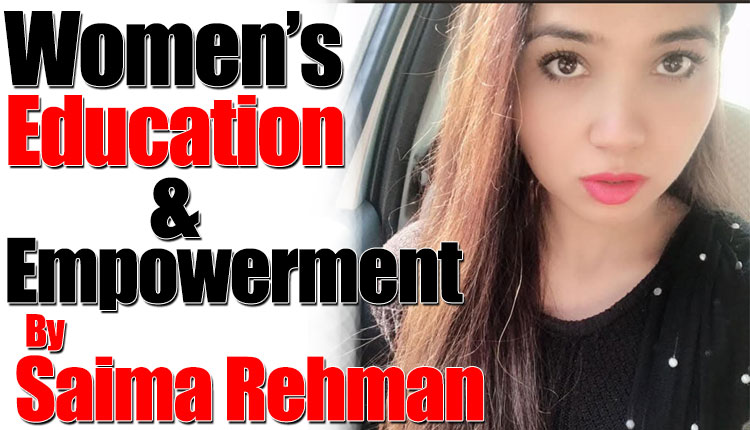
Women constitute half of society and play a fundamental role in every sphere of life, from the family to national development. As half of the population, women hold a key position in the progress and prosperity of any country. They are, in many ways, the backbone of social and economic development.
Women’s education and empowerment are essential conditions for sustainable development, economic stability, and social prosperity. An educated mother contributes significantly to the upbringing and education of an entire family and helps shape future generations.
Education enables women to understand their rights and responsibilities. The more educated a woman is, the greater her chances of accessing economic opportunities and participating meaningfully in society. Women’s empowerment is therefore essential for social progress, while economic empowerment is particularly important for achieving gender equality.
For this purpose, women must have equal access to decision-making processes and economic resources. Both men and women should be able to contribute equally to a productive and prosperous society. However, women often face social pressure, cultural restrictions, and traditional barriers that limit their opportunities. Removing these obstacles and empowering women is one of the most important needs of our time.
Women’s Economic Empowerment
Greater participation of women in economic activities strengthens the national economy. Various studies have demonstrated that increasing women’s participation in the workforce can contribute significantly to economic growth.
Economically empowered women are better positioned to make important decisions about their lives, including decisions related to education, careers, healthcare, and the well-being of their families.
The growth of the internet and digital technology has also created new opportunities for women to participate in economic activities from home. Women can be provided with training in e-commerce, freelancing, digital marketing, and other technology-based skills. Such opportunities can enable women, particularly those facing mobility or social restrictions, to earn income and become financially independent.
Women’s political and social status must also be recognized. No society can achieve meaningful and sustainable development without acknowledging women as equal contributors. Unfortunately, women in South Asia still do not enjoy the level of empowerment and decision-making authority that they deserve.
Strong government policies are required to ensure women’s economic empowerment. This is not merely a matter of benefiting one particular group; rather, empowering women is an investment in a stronger, more prosperous, and more developed society.
Equal Opportunities and Economic Growth
Women represent approximately half of Pakistan’s population, and their contribution is essential to the country’s economic development. Reducing gender disparities can significantly improve economic productivity and contribute to an increase in national output.
If women are provided with greater opportunities to participate in education, employment, entrepreneurship, and decision-making, Pakistan can bring about meaningful social and economic transformation.
To encourage women’s participation in the workforce, effective programs and policies must be developed and properly implemented. At the same time, it is equally important to improve the implementation of laws that already exist to protect women’s rights and ensure equal opportunities.
Various United Nations agencies and other organizations are also working to provide women with support, resources, and opportunities. Greater investment in education and healthcare on an equal basis can create better opportunities for women and help them contribute more effectively to society.
Education and Health: The Foundation of Empowerment
Women are an important pillar of society, which makes their physical and mental well-being extremely important. Addressing women’s health challenges is essential so that they can pursue education, participate in economic activities, and make informed decisions according to changing social conditions.
Healthy and educated women are better equipped to face challenges, make independent decisions, and provide proper guidance and education to the next generation. Investment in women’s health and education therefore benefits not only individual women but entire families and communities.
Economic self-reliance is another crucial aspect of women’s empowerment. Increasing employment opportunities and ensuring women’s participation in the workforce can improve their economic independence as well as their social status.
Employment opportunities should be expanded across different sectors, while workplaces should provide a safe, supportive, and equitable environment for women to develop their careers.
The government and society have a shared responsibility to provide women with equal opportunities in education, employment, and professional development. When women are given the opportunity to move forward and utilize their abilities, the national economy becomes stronger and the pace of development accelerates.
The Role of Women in Pakistan’s Development
Women’s contribution to national development is fundamental. For Pakistan to become a developed and prosperous country, it is essential to empower women and make full use of their skills, knowledge, and potential.
The discussion surrounding “Women and Development” presents a significant challenge for intellectuals, policymakers, and society as a whole. There is a need to develop a framework for the role of the modern Pakistani woman in national development that reflects Islamic teachings while promoting universal human values.
Such a framework should recognize the distinctive responsibilities of both men and women while ensuring dignity, opportunity, justice, and respect for all.
Our efforts toward women’s empowerment must continue. Change may come gradually, but it must remain consistent and sustainable. Pakistan needs long-term policies and practical measures that enable women to receive quality education, access healthcare, participate in economic activities, and contribute meaningfully to national development.
Empowering women is not simply about improving the lives of women. It is about building stronger families, a more productive workforce, a healthier society, and a more prosperous Pakistan.