 Lahore 22°C
 Karachi 28°C
 Islamabad 23°C
How Did Muhammad Ahmad Khan Kasuri Receive the Title of Nawab?
By: Ilyas Chaudhry
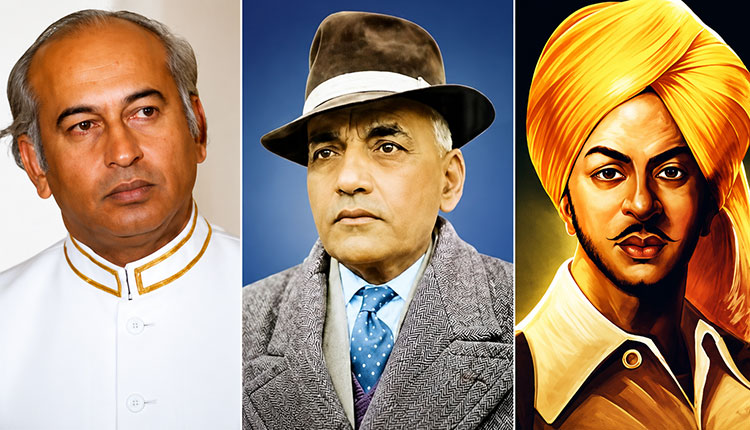
The execution of Bhagat Singh remains one of the most discussed events in the history of the Indian subcontinent. Bhagat Singh, along with Rajguru and Sukhdev, was executed in Lahore on March 23, 1931. Decades later, the name of Muhammad Ahmad Khan Kasuri became associated with another major and controversial chapter in the region’s political history.
Muhammad Ahmad Khan Kasuri and the Execution of Bhagat Singh
According to historical accounts, the execution proceedings involved specific legal and administrative requirements concerning prison officials and magistrates. Some accounts suggest that officials were reluctant to participate in the proceedings surrounding Bhagat Singh’s execution.
It was during this period that the name of Muhammad Ahmad Khan Kasuri , an honorary magistrate from Kasur, reportedly came into the picture. According to a commonly cited historical account, Kasuri participated in the proceedings related to Bhagat Singh’s death warrant and agreed to perform the duties associated with the execution.
Some historical narratives further claim that Bhagat Singh was executed in the presence of Muhammad Ahmad Khan Kasuri at Lahore Central Jail. However, details concerning Kasuri’s exact role remain subject to differing historical accounts.
How Did He Receive the Title “Nawab”?
One widely circulated historical account claims that Muhammad Ahmad Khan Kasuri was awarded the title"Nawab" by the British authorities in recognition of his cooperation and services during the colonial period.
He subsequently became known as Nawab Muhammad Ahmad Khan Kasuri. However, the precise circumstances surrounding the conferment of the title, as well as his exact role in Bhagat Singh’s execution, are described differently in various historical narratives.
A Tragic Event Decades Later
More than four decades after Bhagat Singh’s execution, Muhammad Ahmad Khan Kasuri became the victim of a fatal attack that would eventually have far-reaching consequences for Pakistan’s political history.
On November 11, 1974 , gunmen opened fire on a vehicle in Lahore. Muhammad Ahmad Khan Kasuri was killed in the attack, while his son, Ahmad Raza Kasuri, survived.
The murder case later became closely associated with former Pakistani Prime Minister Zulfikar Ali Bhutto , who was accused of involvement in a conspiracy to assassinate Muhammad Ahmad Khan Kasuri.
After a prolonged legal process, Bhutto was convicted and sentenced to death. He was executed on April 4 , 1979 , at Rawalpindi Jail.
A Connection Between Two Historic Chapters
The life and death of Muhammad Ahmad Khan Kasuri became connected, through different historical narratives, with two major events separated by more than four decades.
On one side was the controversial execution of Bhagat Singh during British rule. On the other was the murder of Kasuri in 1974 and the subsequent case that ultimately led to the execution of Zulfikar Ali Bhutto.
The historical connection between these events continues to generate debate. Some details remain disputed, and different accounts offer varying interpretations of Muhammad Ahmad Khan Kasuri’s role in the execution of Bhagat Singh and the origins of his title.
Nevertheless, the story remains an intriguing and controversial chapter linking the colonial history of British India with the turbulent political history of Pakistan.