
 Lahore 24°C
 Karachi 28°C
 Islamabad 23°C
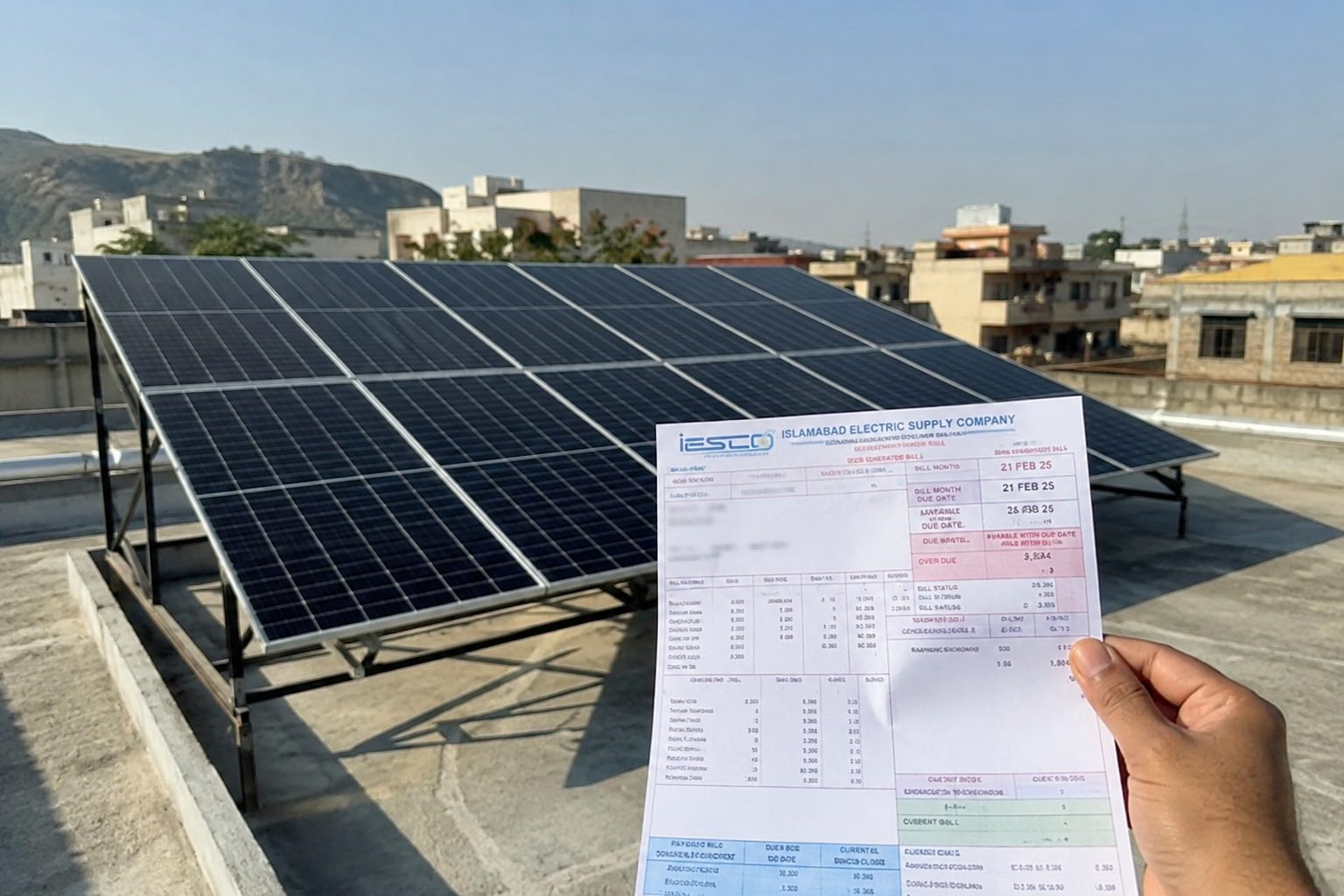
A 3kW on-grid solar system can cost around Rs. 3.8–4.7 lakh in Pakistan in 2026, depending on the equipment and installation. That's a significant amount of money to spend upfront, so naturally, you would want to know whether the savings will actually justify the investment.
This is where the idea of a solar payback period becomes important. If you spend Rs. 4 lac on a system and save Rs. 10,000 every month, it would take roughly 40 months to recover that initial investment. If your monthly savings are Rs. 20,000, the same investment could be recovered in about 20 months.
So the real question isn't simply, "How much does solar cost?" It's "How quickly will my solar system pay for itself?"
What Payback Actually Looks Like for One Household
Take a household using around 400 units of electricity every month, with a 3.3kW solar system, on IESCO's network.
Based on its electricity consumption, applicable tariff and estimated solar generation, the system saves approximately Rs. 9,884 every month. That's nearly Rs. 1.2 lakh in savings over a year, putting the estimated payback period at around Year 3.
For someone considering a solar investment of several lac rupees, that's an encouraging number. But it raises another question: would your system pay for itself just as quickly, wherever you live? Probably not necessarily, and that's actually where the calculation gets interesting.
Why the Same System Can Pay Back at Different Speeds
Imagine two households that both install a 5kW solar system. It might seem reasonable to assume both will save roughly the same amount and recover their investments around the same time. In practice, payback speed comes down to a few things that vary from household to household.
1) How much electricity you use. If one household uses 300 units a month and another uses 700, their systems aren't replacing the same amount of grid electricity, even with identical panels. More usage offset means more savings.
2) Which DISCO you're on. A household on IESCO may see a different calculation from one on LESCO, K-Electric, or any other DISCO, because tariffs and billing structures aren't identical across Pakistan. Since your savings come from electricity you no longer buy from the grid, the price of that electricity directly affects how valuable your solar generation is to you, no matter which city you're in.
3) How your system is sized for your home. Your neighbor may have installed 5kW, your cousin may have 8kW, an installer may recommend 10kW, but none of that tells you what your home needs. A system sized for a household using 800 units a month may not make financial sense for one using 300.
The better starting question isn't "how many panels can I fit on my roof." It's "how much electricity do I actually use." To have more accurate estimates of what solar size is suitable for your household, the monthly savings associated with it, and the environmental impact you would be making (yes you are going green!), use this solar savings calculator and optimize your long-term energy and financial savings plan.
The Price You Pay for Solar Matters Just as Much
Monthly savings are only half of the payback calculation. The other half is what you actually spend on the system.
A 3kW system costing Rs. 3.8 lakh has a different payback period from one costing Rs. 4.7 lakh, even if both produce similar monthly savings. Your final price varies depending on the panels, inverter, mounting structure, wiring, and installation, and adding batteries can push the upfront cost up considerably. That's why a solar quote shouldn't be judged on its savings estimate alone, you need to weigh what you're investing against what you're likely to save.
So, Is Solar Worth the Investment?
There isn't one payback period that applies to every household in Pakistan. You may see estimates of three, four or five years, but without knowing the household's electricity consumption, DISCO, and system cost, those numbers don't tell you much about your own situation. So, yes, solar is only worth investing if you know your numbers about how much you use, how much you can actually save, and when your investment will pay off with the solar panel size being installed.