 Lahore 19°C
 Islamabad 20°C
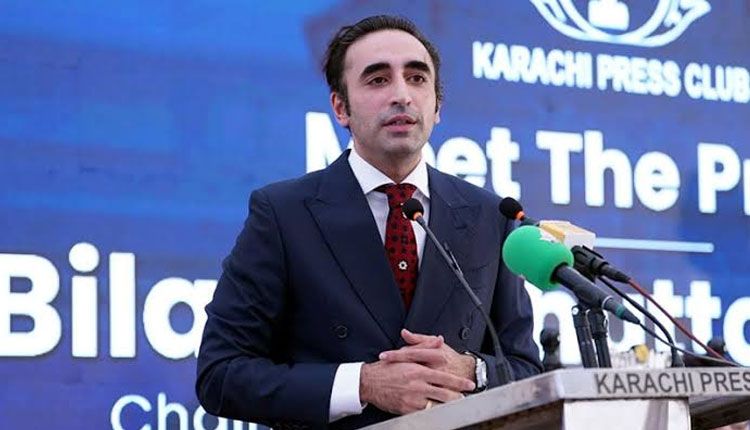
KARACHI : Pakistan Peoples Party (PPP) Chairman Bilawal Bhutto Zardari has called for a joint democratic strategy among all political forces to address the country's current and future challenges, stressing the need to restore public confidence in state institutions.
Addressing journalists at the Karachi Press Club, Bilawal said the parliamentary system had not collapsed suddenly but had been brought down deliberately.
"The system did not collapse suddenly; it was brought down," he said, adding that every institution had lost public confidence and a comprehensive political reset was essential to restore credibility.
Bilawal stressed that Parliament must be strengthened, the media made free, the Election Commission made credible and the accountability system ensured to be impartial. He also called for strengthening the judiciary through broader political consensus.
He said meaningful public confidence in future elections would not be possible without electoral reforms. He also suggested considering the restoration of reserved seats taken away from the opposition.
The PPP chairman said journalists and media organisations were facing difficult circumstances, adding that freedom of the press was essential for democratic debate, freedom of expression and discussion of public issues.
He urged the Karachi Press Club and journalists across the country to prepare recommendations regarding media freedom, journalists' protection and their legal and professional challenges. The PPP, he said, would raise these issues in Parliament.
Bilawal expressed concern over the country's economic situation, saying rising poverty, unemployment and inflation could further increase public hardships in the coming days.
He criticised political leaders for focusing on confrontation, hatred and division instead of addressing people's fundamental problems.
He said a political reset should begin with politicians acknowledging their own mistakes and responsibilities, adding that he too accepted his share of responsibility.
Bilawal said Parliament, the Election Commission, the judiciary and the media had all lost public trust and credibility. Restoring confidence in these institutions, he added, required national dialogue and collective efforts.
Emphasising the role of the opposition, he said criticism of government policies should not be treated as a question of patriotism. Differences between the government and opposition should be resolved through debate and arguments rather than bullets, arrests, threats or imprisonment.
He said senior politicians, including Maulana Fazlur Rehman, had the democratic and political right to criticise the government, which should respond through dialogue instead of arrests, NAB proceedings or other pressure tactics.
Bilawal also described Imran Khan and his party as an important political stakeholder and a political reality in the country.
He said allegations of electoral rigging must be addressed seriously to restore the opposition's confidence in Parliament. He also called for ending the use of accountability institutions for political victimisation.
The PPP chairman stressed that Parliament members should not fear NAB action for voting on legislation or delivering speeches. He further called for efforts to end the tradition of political imprisonment in Pakistan.
On terrorism, Bilawal said the entire nation needed to unite against the threat. If most Pakistan Tehreek-e-Insaf leaders had been willing to join joint efforts against terrorism but the process was derailed, the government should re-engage with the opposition and resume talks from where they ended.
He also called for reforms in the Election Commission, accountability system and judiciary, saying these institutions could not function effectively without public and political confidence.
Bilawal said corruption was a major challenge and called for an impartial accountability system. He added that responsibility for corruption in government projects should not be limited to politicians, as bureaucracy and relevant officials also played a role. Digitalisation and modern technology, he said, could help improve transparency.
Referring to constitutional amendments, he said the 1973 Constitution and the 18th Amendment had succeeded because of broad political and public consensus. He said he had also worked extensively to secure approval of the 26th Amendment through mutual understanding despite the absence of complete consensus.
However, he said the 27th Amendment had been passed through a "brute majority" rather than political consensus or mutual agreement.
Responding to questions about the creation of new provinces, Bilawal said the PPP supported the establishment of provinces in accordance with the Constitution, law and public aspirations, but would not accept any unconstitutional or forced measures.
He said any attempt to divide Sindh, including Karachi, against the wishes of its people could create dangerous divisions across society. Such tensions, he warned, would not remain confined to Karachi but could also affect Hyderabad, Mirpurkhas, Tando Allahyar, Nawabshah and other cities.
He said the Constitution and law provided a clear procedure for creating new provinces and opposed attempts to pursue the matter through unconstitutional means or referendums.
Asked about proposals to make Karachi a federal territory or place Karachi, Gwadar and Islamabad under a joint administrative arrangement, Bilawal said no such discussions had taken place with him or the President of Pakistan.
He said it would not be appropriate to draw conclusions based solely on media reports if the Prime Minister's Cabinet had not made any decision on the matter.
Bilawal urged press clubs across the country to invite all political parties, organise seminars and hold discussions with politicians to initiate serious national debate on the country's challenges.
He said the way out of the current crisis lay not in political victimisation, hatred or division, but in democracy, dialogue, consensus and addressing public concerns.
Sindh Chief Minister Murad Ali Shah, provincial ministers, representatives of journalists' organisations and a large number of journalists were also present.