 Lahore 32°C
 Islamabad 29°C
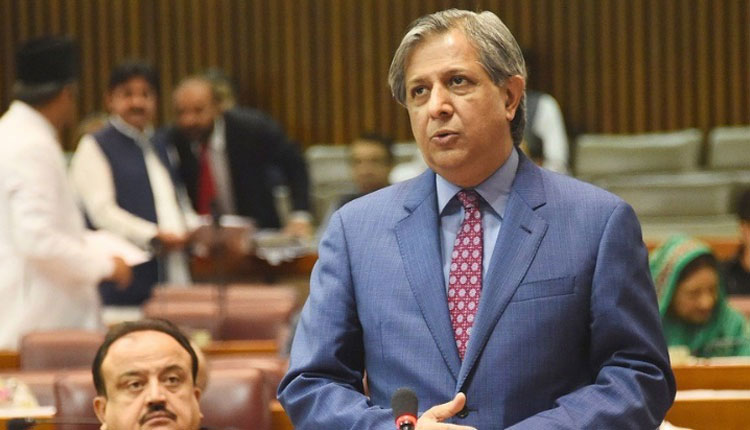
The National Assembly session is underway under the chairmanship of Speaker Sardar Ayaz Sadiq. At the outset, a motion to suspend Question Hour was moved by the Federal Minister for Parliamentary Affairs. The opposition opposed the motion, but it was approved by a majority vote.
During the session, a resolution seeking parliamentary endorsement of the imposition of an emergency in Khyber Pakhtunkhwa was presented. Tariq Fazal Chaudhry tabled the resolution endorsing the President’s declaration of emergency in the province, after which debate on the matter began. Attorney General Mansoor Usman Awan also arrived in the assembly.
Addressing the House, Federal Law Minister Azam Nazeer Tarar said that a declaration of emergency in a province must be presented before both Houses of Parliament. He stated that the government had made the decision after extensive deliberations, citing internal unrest, cross-border infiltration and provincial government actions that, according to him, were increasingly posing a threat to national security.
He said that a declaration of emergency must be presented before Parliament within ten days of its announcement. Referring to comparisons drawn by several members with October 12, he said the matter had been discussed in detail by the federal cabinet. He added that the situation in Khyber Pakhtunkhwa had become a threat to national security and that several factors had contributed to the rise in terrorism over recent years.
According to the law minister, the Pakistan Armed Forces and police had made significant sacrifices and achieved successes in the fight against terrorism, but the security situation had deteriorated once again. He stated that more than 3,700 terrorist incidents had occurred within a year.
Azam Nazeer Tarar said that at one point, a march towards Islamabad had been announced, but the government had opted for negotiations rather than a retaliatory response. Talks between the government and opposition were held in the Speaker’s chamber, where the coalition partner, Pakistan Peoples Party, also supported democracy, he added.
The minister said negotiations continued for two days, with discussions on draft documents extending until 2:30 a.m. He maintained that the central issue was to formulate a policy to combat terrorism. However, he claimed that the PTI founder’s demands for facilities in prison were raised during the talks.
Tarar said matters relating to prison facilities were not entirely within the government’s authority and could be dealt with under prison rules, with the option of approaching a court where necessary. He added that the government had the authority to grant a presidential pardon, after which discussions on counterterrorism strategy resumed.
The law minister said the opposition had different priorities and initially demanded concessions for the PTI founder in prison. Referring to the dissolution of two provincial assemblies by the PTI in the past, he said the party later realised that the decision had been a mistake.
He further stated that the government and opposition had agreed during negotiations to hold elections across the country simultaneously. Under the proposed arrangement, the budget would first be approved, followed by the election process.
According to Tarar, the financial burden associated with the International Monetary Fund (IMF) had also been managed and the relevant matters had been settled. He said Shah Mahmood Qureshi was leading the PTI negotiating team when he received a phone call from his leader instructing him not to proceed with the negotiations.
Tarar claimed that Qureshi subsequently informed the participants that his leader had vetoed the talks.
During the speech, opposition member Shafqat Awan interrupted the law minister. Tarar responded with sarcastic remarks directed at Awan, who retorted that, unlike Tarar, he had not entered the assembly on the basis of Form 47.