 Lahore 25°C
 Karachi 27°C
 Islamabad 23°C
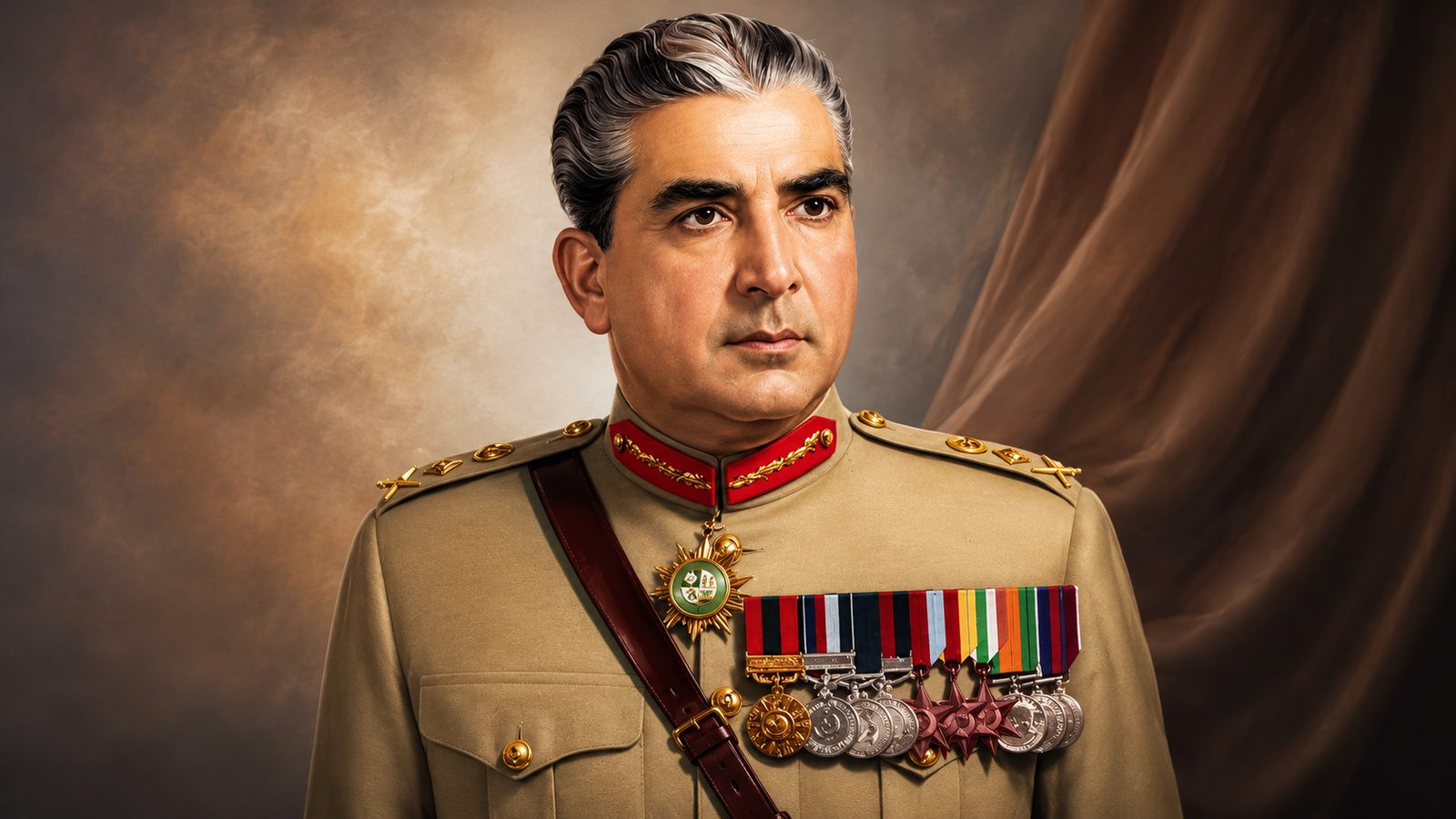
On the evening of March 1969, General Agha Muhammad Yahya Khan, Commander-in-Chief of the Pakistan Army, imposed martial law in the country. Initially, he did not claim the office of President, but on April 4, 1969, he assumed the presidency.
The objectives with which General Yahya took over the government did not include the intention of remaining in power indefinitely or establishing a new system during his tenure. This was quite different from the ambitions and objectives of the Field Marshal who had taken power on October 7, 1958, when he was still a General. In his address at the time, the then President justified the imposition of martial law by arguing that politicians had failed. He did not describe the move as a restoration of democracy; rather, he presented it as the beginning of a new system that was the only means of saving the country.
In his address on March 26, 1969, General Yahya stated that his sole purpose in imposing martial law was to protect the lives, liberty and property of the people and to restore the administration of the country to normal functioning.
As Chief Martial Law Administrator, he declared that his foremost and most important task was to restore the system and ensure that the administration resumed its daily functions to the satisfaction of the people. He stated that the country had already experienced enough administrative disorder and unrest and that he would ensure that such disorder and unrest would never occur again. He also warned every member of the administration to take his warning seriously.
Addressing his fellow citizens, General Yahya made it clear that his only objective was to establish a constitutional government. He expressed his firm belief that a clean, transparent and honest administration was essential for a reasonable and constructive political life, for the expression of the people's will through a fair electoral process, and for the smooth transfer of power among elected representatives.
According to him, the elected representatives would be responsible for framing a workable constitution and resolving all the political, economic and social problems that were causing difficulties for the people.
On this basis, General Yahya's position was essentially that of a caretaker who had come to restore law and order and transfer power to elected representatives as soon as possible. This meant that he essentially had two options: either to announce a new constitution himself or establish an administrative mechanism for the formulation of a constitution.
In reality, law and order was restored with remarkable speed. The harsh punishments imposed under the martial law system made it practically impossible for large crowds to gather at one time or for political movements and demonstrations to mobilize people for processions and strikes.
At that time, public sentiment was largely shaped by the belief that their movement and struggle had succeeded and that Ayub Khan's rule and constitution had ended as a result of the popular movement. The prevailing view was that people did not necessarily consider martial law desirable in itself, but believed that it was unavoidable for national security and future constitutional stability.
The experience of 1958 had created a kind of blind confidence among the people, leading them to regard martial law as the ultimate remedy for all national problems. This, in turn, eventually paved the way for dictatorship.
Before General Yahya assumed power, the law-and-order situation had deteriorated so rapidly that his intervention came to be regarded as expected and inevitable. The worsening conditions in the country created a favorable environment for General Yahya and produced a political landscape for which people were mentally prepared.
By November 1969, General Yahya announced his next course of action. During this period, he met with political leaders so that all necessary constitutional amendments could be made before the elections.
The justification for this approach, in his view, was that this was the one issue on which consensus and harmony could be achieved. He believed that the remaining decisions should be left to the people to determine after the elections.
He announced that elections would be held on October 5, 1970, and that political activities would be permitted from January 1, 1970.
By March 31, 1970, the entire legal framework for the electoral process had been prepared, and the One Unit system of West Pakistan was abolished for the purpose of the elections.
Among the other fundamental matters that were expected to be settled through consensus was the nature of the new constitution. It was stated that the new constitution would follow a federal parliamentary system. Elections would be held on the basis of adult franchise. The enforcement of fundamental human rights would be guaranteed with the assistance of the courts.
The independence of the judiciary and its role as guardian of the Constitution would also be protected. The Constitution would be based on an Islamic system, which was described as being rooted in the ideology of Pakistan.
This raises an important question: if the restoration of the constitutional system and the transfer of power to elected representatives were indeed the primary objectives, why were elections scheduled for October 5, 1970—18 months after General Yahya came to power—when law and order had been restored relatively quickly?
It is true that General Yahya held meetings with political leaders in an effort to develop constitutional consensus. However, it is also the case that he continued to draw upon the guiding principles of the Ayub era and followed lines of action that later became a source of disagreement.
During this period, political activities were not permitted, nor was there any real opportunity for political parties to organize themselves. The question of conducting political campaigns did not even arise.
Under these circumstances, it was difficult to understand what concrete success could realistically be expected from these negotiations. The only major point on which consensus was reached at the Round Table Conference was the abolition of the One Unit system.
In his broadcast speech of November 28, 1969, General Yahya presented three alternative solutions.
First, a Constitutional Convention could be convened.
Second, the 1956 Constitution could be reviewed.
Third, a referendum could be held on constitutional reforms.
General Yahya himself rejected the first option, arguing that arrangements for elections had already been made. Particular reference was made to elections for a Constituent Assembly, the result of which was expected to lead to the transfer of power, although the process ultimately became subject to unnecessary delay.
The 1956 Constitution was rejected because it contained the One Unit arrangement, which, according to General Yahya, was no longer acceptable. This was an important change that was introduced outside the Assembly.
It is clear that if there was consensus against the One Unit system, the elected Assembly could have abolished it through a constitutional amendment to the 1956 Constitution.
The third option, namely a referendum, was also considered unsuitable. According to General Yahya, a referendum could only work when issues were extremely simple and could easily be answered with a straightforward "Yes" or "No." For an issue as complex and important as a constitution, a referendum was therefore not considered an appropriate solution.
Later, the Legal Framework Order was also incorporated into the constitutional framework and enforced, except for one particularly sensitive provision concerning the distribution of powers between the provinces and the Centre.