 Lahore 21°C
 Karachi 28°C
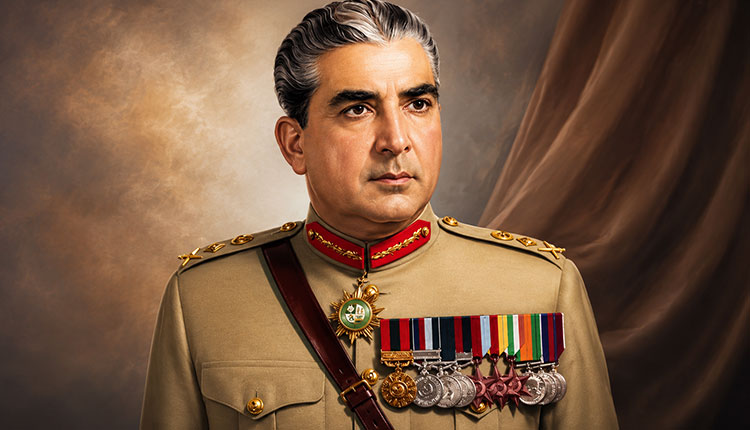
The purpose of Yahya Khan’s announcement remained unclear as to why it was declared on November 29, 1969, that political activities would not be permitted before January 1, 1970.
According to the timetable, two orders were issued on March 30, 1970. The first concerned the dissolution of the West Pakistan province, while the second related to the Legal Framework Order.
Under the first order, the four provinces were to be separated from the One Unit system. Under the second, the National Assembly of Pakistan was to frame a Constitution, while elections to the provincial assemblies were also to be held.
Under the Legal Framework Order, the National Assembly was required to keep five basic principles in mind while framing the Constitution. These were essentially the same principles that had taken concrete shape as a result of the Round Table Conference and had eventually led to an agreement. General Yahya himself had stated that there was complete consensus and harmony on these matters.
The second issue, which was also announced as having been settled through complete consensus, concerned the dissolution or abolition of the West Pakistan province.
The most important aspect of the Legal Framework Order was the procedure through which powers were to be distributed between the Centre and the provinces. According to sub-clause 4 of Clause 20 of the Order, all kinds of powers, including legislative, administrative and financial matters, were to be distributed between the federal government and the provinces in such a way that the provinces would enjoy the maximum possible autonomy.
At the same time, the federal government was to retain sufficient legislative, administrative and financial powers to conduct the country’s internal and external affairs effectively, protect its independence, and maintain national unity.
Nature of the Six-Point Programme
The question arose as to whether the Legal Framework Order clearly defined the limits of provincial autonomy. It is important to note that, on one hand, there was the Six-Point Programme, which had led to the breakdown of negotiations at the Round Table Conference, while on the other hand there was the principle mentioned in the Legal Framework Order.
According to this principle, the unity and security of Pakistan were to be protected through the Constitution.
General Yahya had three constitutional references concerning the distribution of powers between the Centre and the provinces: the Government of India Act 1935, the Constitution of 1956 and the Constitution of 1962. The second Constitution had been framed by the Constituent Assembly, but remained in force for a relatively short period before being abrogated in 1958, prior to the first general elections.
Given the sensitive nature of the issue, provincial autonomy should have been defined through the Legal Framework Order, while the responsibility for making future amendments to increase or reduce provincial autonomy could have been left to the elected assembly.
The question was whether the guarantees provided in the Legal Framework Order for national security could remain effective after the elections and ensure unity and consensus. Another question was whether the Six Points were strong enough to create a powerful and effective Centre alongside autonomous provinces.
There were two other important elements of the legal framework.
One of them was that there was no specific provision requiring a particular majority for the approval of a constitutional draft as law.
General Yahya Khan believed that he was taking all the steps within the framework of the Constitution on which there was consensus, but the voting procedure was not included among them.
General Yahya believed that it was necessary to leave this matter to the elected house. However, the reason for this remains difficult to understand.
If consensus was required at all costs, it should have been achieved through the provisions of the Constitution itself rather than through conventional methods.
More importantly, the question of what majority would be required was left to a verbal understanding, with the consequences left to be seen.
Had this not been the case, the Assembly itself could have determined that the decision should be made through a specific voting procedure. When the question arose before the House as to how many votes would constitute a majority, that question itself could also have been settled through a simple majority.
Therefore, those who held a majority in the House would have been able to support such a decision and put it into practice. As far as the situation was concerned in the context of Pakistani politics, however, the actual situation was highly disappointing.
The reason was that under the principle of one person, one vote, East Pakistan had a majority on the basis of its population. For decisions in the Assembly, one issue was particularly important: provincial autonomy.
Sheikh Mujibur Rahman had already presented the Six Points, and had there not been an expectation that he would win 98 percent of the seats from East Pakistan, an environment for the continuation of the Round Table Conference could have emerged. In this way, Mujibur Rahman could demonstrate that he represented a major political force.
Therefore, the Six Points became a contentious issue between East and West Pakistan.
Thus, determining what majority was required in the House to abandon the Six Points was, in effect, a decision that East Pakistan itself had to make. In other words, East Pakistan had to decide whether it wanted to remain with West Pakistan or not.