 Lahore 23°C
 Karachi 30°C
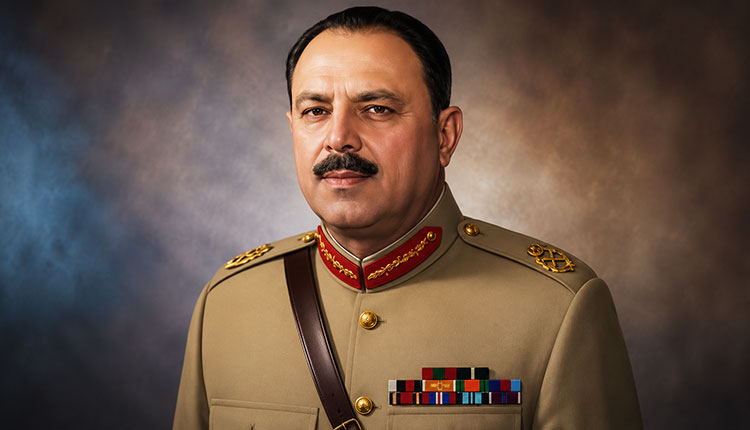
The Elective Bodies Disqualification Order (EBDO) of 1959 was introduced with the stated objective of eliminating corruption and implementing political reforms in the country. Under EBDO, politicians were subjected to investigations, several political figures were disqualified on allegations of corruption, some political parties were banned, while certain politicians were pressured to withdraw from active politics.
Critics, however, rejected the government’s stated justification for EBDO. They argued that the real purpose of the Elective Bodies Disqualification Order was to weaken the country’s political system and strengthen military rule.
At the same time, Ayub Khan launched a vigorous campaign against corruption and presented his government as an alternative to corruption and political instability. He portrayed his administration as a clean, strong and politically stable system capable of bringing meaningful reforms to the country.
As part of this reform programme, Ayub Khan introduced the system of Basic Democracies in 1959, rather than restoring the traditional political system. Under this arrangement, local government elections were introduced and around 80,000 new representatives entered the political system. Local councils were established through these representatives, who later became the electoral college for Ayub Khan’s presidential election.
Ayub Khan maintained that the Basic Democracies system was designed to bring the benefits of democracy to the grassroots level. His political opponents, however, largely agreed that the system was primarily intended to strengthen Ayub Khan’s presidency and consolidate his political authority.
General Ayub Khan’s basic argument was that the Western-style model of democracy was not compatible with Pakistan’s social traditions and historical circumstances. He believed that democracy should instead be built from the grassroots upward. The details of this new form of political administration were outlined in the Basic Democracies Order of 1959, which introduced a system of local self-government.
During the Ayub Khan era, present-day Bangladesh was still part of Pakistan and was known as East Pakistan. However, East and West Pakistan were geographically separated by the entire territory of India. This considerable distance contributed to significant differences between the two regions in terms of social conditions, lifestyles and political development.
The concept of Basic Democracies introduced by Ayub Khan was not entirely new. The British administration had experimented with forms of local government in Bengal decades earlier. The Village Chaukidari Act of 1870 and the Bengal Local Self-Government Act of 1885 were among the measures introduced in this context.
Politically, the people of Bengal, or East Pakistan, had developed a stronger tradition of political participation and awareness than many parts of West Pakistan. As a result, the Basic Democracies system was viewed by many in East Pakistan not as a step forward, but as a step backward.
This perception contributed to growing concerns among Bengalis that if military rule continued for an extended period, East Pakistan could effectively become little more than a colony of West Pakistan, with limited participation and influence in the central government.
To be continued...