 Lahore 22°C
 Islamabad 18°C
The debate over dividing Pakistan's existing four provinces into twelve provinces has gained significant momentum in recent days. Different political, journalistic, and analytical circles are presenting contrasting views on the issue. While some influential commentators claim that the creation of new provinces is inevitable, others believe the debate is merely an attempt to divert public attention from more pressing national issues.
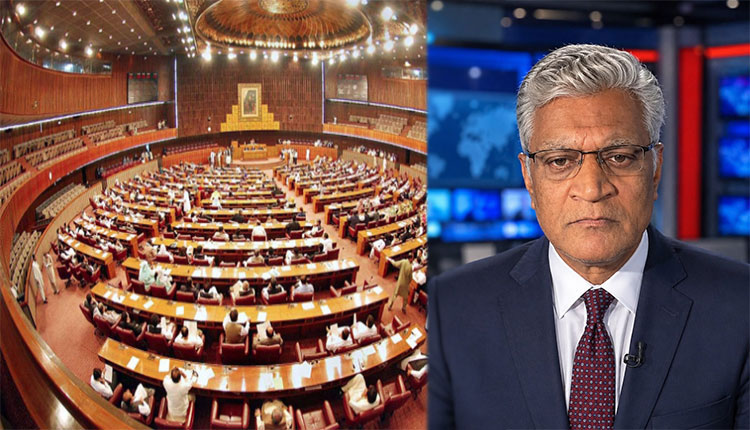
Some well-informed commentators, believed to have access to important sources, claim that despite strong resistance from politicians, nationalist groups, and political analysts, new provinces will be established under all circumstances. According to these claims, preparations have already been completed, including proposed provincial maps, administrative infrastructure plans, and a framework for the country's future political structure. Some even suggest that preparations are underway to create an impression of an impending system collapse.
However, those reportedly involved in such planning continue to maintain that they neither interfere in politics nor have any connection with political affairs.
On the other hand, a group of journalists and political analysts argues that the proposed division of provinces is not a serious or practical plan. They believe the issue has been deliberately introduced to divert attention from an important national matter. According to this perspective, like the proposed canal system in Thal and the Kalabagh Dam project, the idea of creating new provinces may eventually remain limited to political slogans and public statements.
Political parties remain firm in their respective positions on the proposed creation of new provinces. The Pakistan Peoples Party (PPP) has emerged as one of the strongest opponents of the idea, particularly when it comes to dividing Sindh.
The party frequently refers to a resolution passed by the Sindh Assembly opposing the division of the province. The PPP maintains that under Article 239 of the Constitution of Pakistan, any alteration in provincial boundaries requires approval from the relevant provincial assembly.
According to the party's position, even if a provincial assembly passes a resolution supporting the creation of a new province, the matter would still require approval through the constitutionally prescribed parliamentary process, including a two-thirds majority in both houses of Parliament.
The political resistance to dividing Sindh is also reflected in the widely known slogan: "Marsoon Marsoon, Sindh Na Desoon" (We will die, but we will not surrender Sindh).
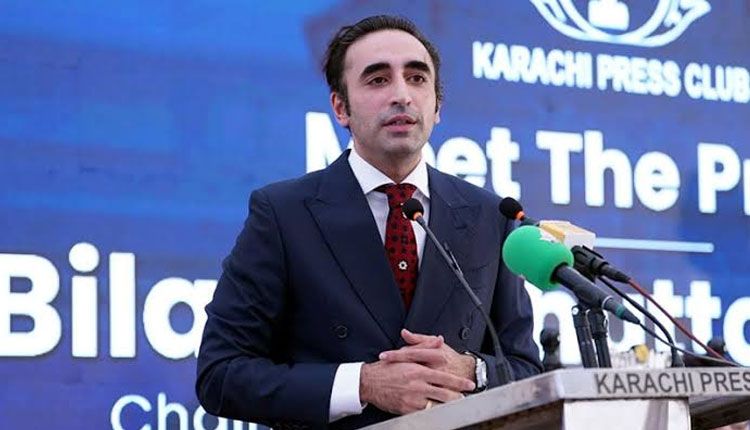
PPP Chairman Bilawal Bhutto Zardari has gone a step further, warning that any attempt to forcibly divide Sindh could lead to bloodshed in the province.
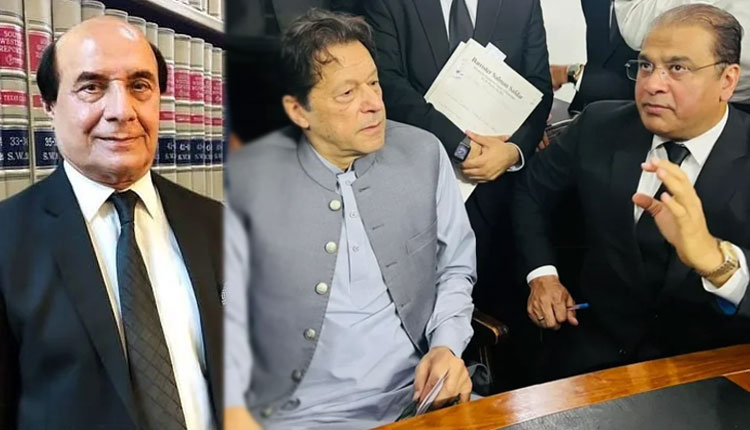
Senior Pakistan Peoples Party leader, former Law Minister, and one of the key architects of the 18th Constitutional Amendment, Mian Raza Rabbani, has also expressed his position on the issue.
He has made it clear that a referendum cannot serve as a substitute for any provision of the Constitution.
According to his argument, when the Constitution already provides a specific procedure for altering provincial boundaries, any such decision must follow the prescribed constitutional mechanism. If the Constitution creates obstacles to a proposed plan, those provisions cannot simply be bypassed through a referendum.
Rabbani has also raised concerns about attempts to obtain judicial endorsement of the outcome of such a referendum. In his view, doing so could effectively amount to granting the judiciary authority to interfere with the Constitution or rewrite its provisions.
He believes such an approach could establish a dangerous precedent for the future by undermining the constitutional framework and established legal procedures.
Punjab, another major stakeholder in the debate over the creation of new provinces, has also indicated that the issue should be resolved in accordance with public aspirations and through Parliament.
The provincial position is that the matter should be debated in the Punjab Assembly, while the final decision should be taken through the parliamentary process.
This stance highlights that the creation of new provinces is not merely an administrative matter but a major political and constitutional issue requiring broader consensus.
The federal government has also failed to present a unified position on the issue. Federal ministers appear to be competing with one another in expressing support for a referendum on the proposed creation of new provinces.
Meanwhile, the top leadership of the Pakistan Muslim League-Nawaz (PML-N), particularly former prime minister Nawaz Sharif and Prime Minister Shehbaz Sharif, has maintained complete silence on the matter.
Their silence has reportedly become a source of frustration for those circles that claim a broader plan for the restructuring of Pakistan's provinces is already under consideration.
On the other hand, the Minister of State for Inter-Provincial Coordination has stated that, for now, the proposal exists only in social media discussions, journalistic commentary, and political analysis.
According to the minister, once the proposal is formally presented before the government, it will be placed before the federal cabinet for consideration and discussion.
One important aspect of the entire debate is that the alleged plan for creating new provinces has not yet been formally presented to the government.
Despite this, the issue continues to generate intense discussion among politicians, journalists, analysts, and various influential circles.
The central questions remain: Is the creation of twelve provinces in Pakistan part of an already finalized strategy? Have preparations for the proposed administrative and political restructuring actually been completed? Or will the entire debate eventually fade away like several other controversial national projects that remained confined to political slogans and statements?
For now, the debate over the division of Pakistan's four provinces has intensified, but its practical future will ultimately depend on political consensus, constitutional requirements, and decisions taken through Parliament.