 Lahore 23°C
 Karachi 30°C
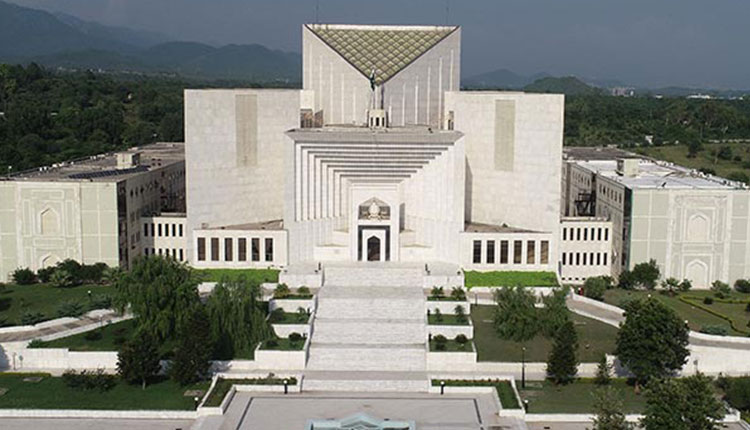
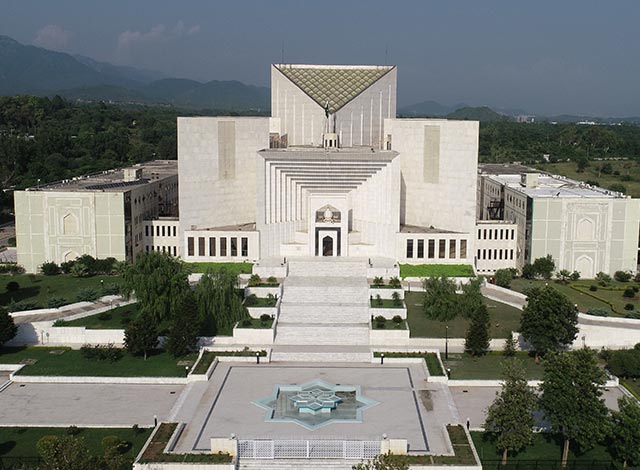
ISLAMABAD : The Supreme Court dismissed a writ petition denying any income tax exemption for Defence Housing Authority (DHA), Islamabad under section 49(2) of income tax act declaring that DHA Islamabad dose not fall within the expression “local authority” occurring in section 49(2) of Income Tax Ordinance 2001.
A three-member bench, headed by Chief Justice of Pakistan Yahya Afridi and comprising Justice Naeem Akhter Afghan and Justice Muhammad Shafi Siddiqui dismissed the DHA appeals.
The DHA, Islamabad had claimed exemption from income tax under section 49(2) of the Ordinance on the premise that it falls within the expression “local authority”. DHA filed its returns under section 49 of the Ordinance for Tax Years 2005, 2006, 2007 and 2008, claiming exemption under section 49(2) on the basis of its status as a local authority. The returns were treated as assessment orders under section 120 of the Ordinance.
Subsequently, the Commissioner (Audit-II), LTU, Islamabad amended the assessments for Tax Years 2005, 2006 and 2007, while the Additional Commissioner (Audit-II) amended the assessment for Tax Year 2008 under section 122(5A) of the Ordinance, treating the assessments as erroneous and prejudicial to the interest of Revenue on the ground that DHA did not fall within the expression “local authority” and was, consequently, not entitled to the claimed exemption.
Aggrieved by the orders, DHA preferred appeals before the Commissioner of Income Tax (Appeals-I), Islamabad, which held that it (DHA) enjoyed the status of a “local authority” and was, therefore, entitled to exemption under section 49(2) of the Ordinance.
The Department, being dissatisfied with the said orders, preferred further appeals before the Appellate Tribunal Inland Revenue, Headquarters Bench, Islamabad. Through its consolidated order dated 18.01.2012, the Tribunal upheld the orders of the first appellate authority.
The Revenue department thereafter brought the matter before the Islamabad High Court through income tax references. The High Court answered the references in the negative. Hence, these appeals.
The judgment, authored by Justice Shafi said; “The appellant has not placed before us material demonstrating a comparable breadth of powers or the predominant and substantial possession of the characteristics identified in the said authorities.” Its reliance upon its territorial sphere and the public nature of the functions which it performs, without establishing the wider attributes of authority which informed the decisions in those cases, is insufficient to bring it within the expression “local authority”.
The judgment also said; “The appellant has not demonstrated, on the material placed before us, that it has been entrusted with the control or management of a municipal or local fund, or otherwise possesses the substantive attributes which this Court has regarded as characteristic of a local authority.”
The appellant’s status, territorial operation and the nature of its functions may establish that it performs public functions within a particular locality, but they do not, without the requisite legal and substantive attributes, establish that it is a “local authority” within the meaning of section 49(2) of the Ordinance.
The judgment noted that the case of the appellant does not advance beyond its assertion that it operates within a defined area and performs functions relating to the development, planning, regulation and administration of that area. These circumstances, by themselves, do not establish either of the statutory attributes contemplated by section 3(28) of the General Clauses Act, 1897 or section 2 of the Local Authorities Loans Act, 1914. In particular, the material placed before us does not demonstrate that the appellant is legally entitled to, or entrusted with, the control or management of a municipal or local fund, nor does it establish the alternative attribute contemplated by section 2 of the Local Authorities Loans Act 1914, namely, a legal entitlement to impose a cess, rate, duty or tax within a local area.
The mere receipt or collection of amounts in connection with the functions performed by an authority cannot, without establishing the legal character of such receipts and the authority under which they are imposed or administered, be equated with the statutory attributes of a local authority, said the judgment.