
 Lahore 23°C
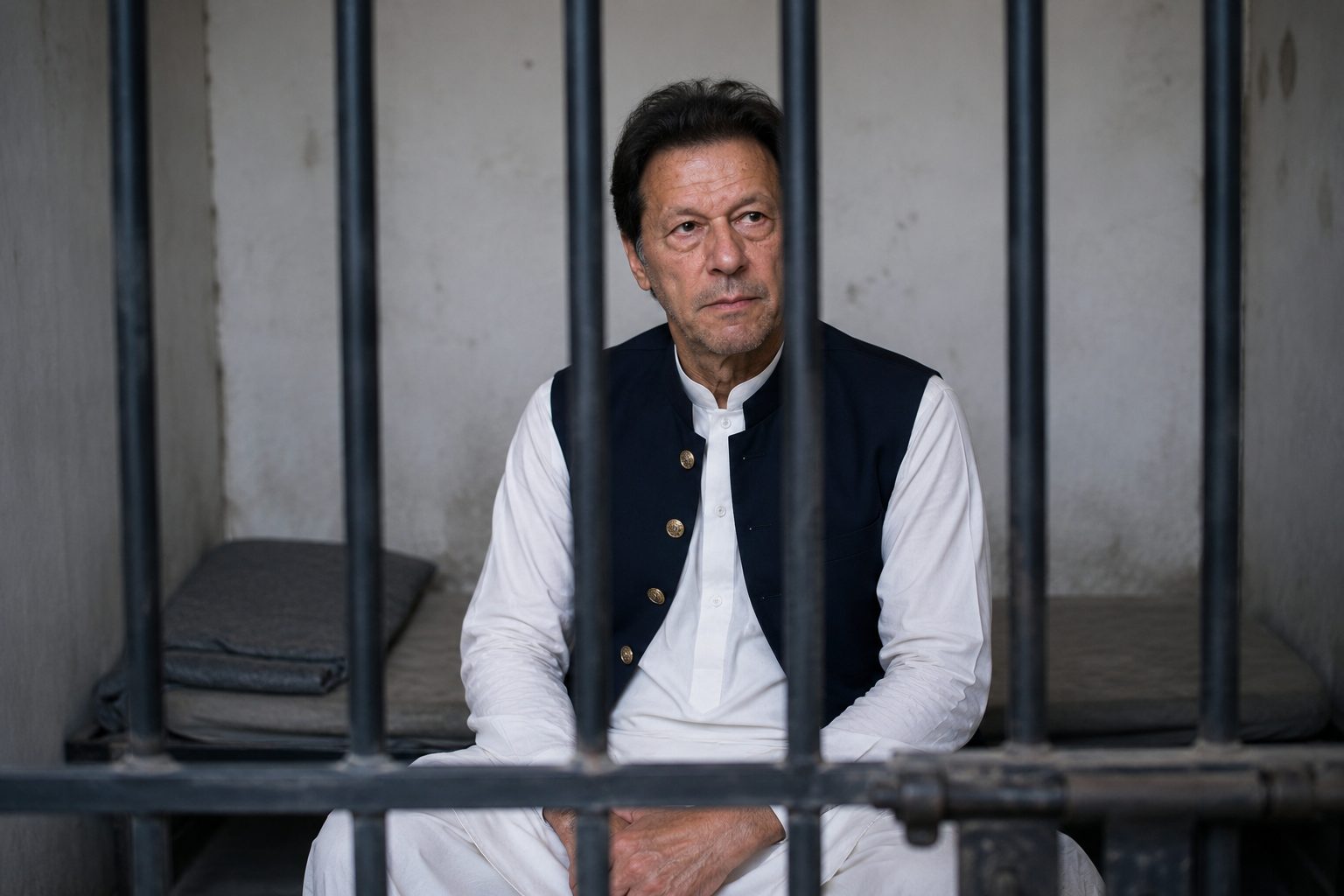
Finally, after enduring the hardships of more than three years in prison, Imran Khan has been transferred from jail to a hospital. Shifa International Hospital in Islamabad is a world-class but extremely expensive hospital, where not only an ordinary person but even the upper class thinks carefully before going there. It is famously said about this hospital that even a dead body is not handed over to the heirs until a bill worth millions has been paid. This was also the reason why the court had asked the question: who would pay the bill of Shifa International? To this, Imran Khan’s party assured that we would pay the Shifa hospital bill ourselves.
One of Imran Khan’s good fortunes is also that he does not have to work hard to obtain billions of rupees; one appeal is enough.
Anyway, as a result of the report submitted by Khan Sahib in the Supreme Court, the deadlock finally broke, and after much delay, Khan Sahib was transferred from jail to the hospital of his choice. But Khan Sahib’s supporters should know that Khan Sahib has not been released; rather, he remains in custody, and the hospital has been declared a sub-jail through a government notification. Access to Khan Sahib will be restricted to doctors, while strict police security will remain both inside and outside the hospital.
Regarding the concession given to Khan Sahib, two possibilities are circulating. One is that Khan Sahib’s health has genuinely deteriorated to such an extent that lack of access to treatment could have become life-threatening. And if Khan Sahib had died inside the jail, managing the reaction to such a tragedy would have been difficult for both those who form the government and those who run it. Therefore, giving Khan Sahib access to treatment was a better strategy.
However, those running the government appeared very angry over the Supreme Court’s decision and were even describing the Supreme Court’s decision as exceeding its powers. An attempt was also made to file a review petition through the Islamabad Commissioner, but it was weak and ridiculous because the petition was filed by someone who was not even a party to the case. On this very objection, the Registrar of the Supreme Court returned the review petition.
The matter has moved in another direction. We were discussing the fact that those running the government were unhappy with this decision, and they also expressed this displeasure through announcements of filing a review petition. But those who make and implement plans also make solid preparations. Therefore, the order was not merely to transfer him to the hospital; it directed that the transfer be carried out within two days, and a copy of the decision was sent directly to the jail superintendent for implementation.
Since the planning was done by those who have the power to stop implementation, what authority did the jail superintendent have to resist? And until the signal was given, what authority did he have to implement it? As an example, decisions of the Supreme Court and High Courts can still be seen lying in the dustbin of history.
However, the signal to the route leading towards the corridors of power, history is witness, cannot turn green until a deal is reached.
So, if the situation was not such that failure to receive treatment could result in the loss of life, then treatment could also have been provided at PIMS. Therefore, treatment and the choice of a hospital of his preference could only become possible if the nerves of the person who had remained steadfast had finally given way.
And Imran Khan cannot be blamed for his nerves giving way or breaking, because the strength and endurance of any leader are reinforced by his party and his voters.
The party made several attempts to secure Khan’s release through struggle. First, then-Chief Minister Ali Amin Gandapur came to Islamabad with a convoy, but could not reach D-Chowk. Then, after being released on bail and taking up residence in Khyber Pakhtunkhwa, Imran Khan’s wife, Bushra Bibi, led a convoy for Khan’s release. But as they approached D-Chowk, she, along with Ali Amin Gandapur, fled when they realized that firing could take place.
Then, it was the poor children and devoted supporters of Khan who faced those bullets in the convoy. After this, Khan Sahib changed the provincial leadership. But despite using all the resources of the province, Sohail Afridi, like Gandapur, also failed to achieve the objective through force.
Are these failures not enough to break the nerves of Khan Sahib—or anyone else?
Then what happened was that, while imprisoned inside the jail, Bushra Bibi and Khan Sahib reached the conclusion that simply remaining in jail and dying there was not wisdom. After all, if there is life, there is a world. Therefore, it was decided to surrender so that release could eventually become possible.
But surrender also has conditions. And the conditions of this surrender are:
- Cooperation in the formation of new provinces.
- Cooperation in the approval of the 28th Amendment.
- Not complete power, but a share in power.
However, conditions do not merely have to be accepted; a sword must also remain hanging over the head to ensure implementation. That means complete release has not yet taken place. The transfer to the hospital for treatment has been implemented. For complete release, the conditions must be fully implemented; otherwise, after recovery, he could be sent back to jail.