 Lahore 32°C
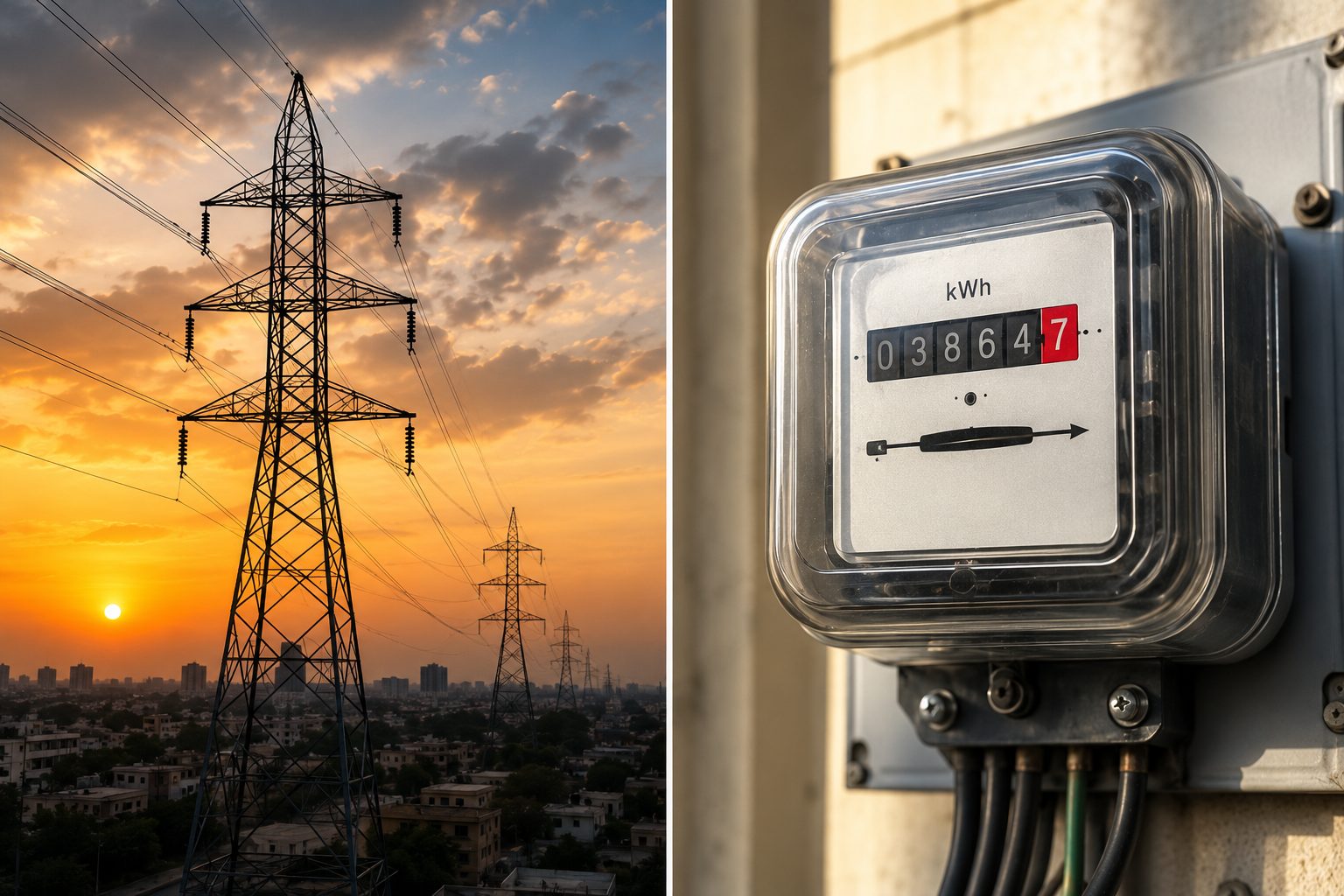
Pakistanis have repeatedly been told that higher electricity tariffs are necessary to control circular debt and make the power sector financially sustainable.
However, electricity bills remain difficult for households and businesses to afford, while circular debt continues to return.
The Power Division said circular debt had fallen to approximately Rs1.614 trillion by June 2025 following operational improvements and agreements with power producers. But an IMF report estimated power-sector circular debt at around Rs1.764 trillion in early 2026, showing that the problem had not been permanently eliminated.
This raises an important question:
If consumers are already paying higher tariffs, why does circular debt continue to increase?
What is circular debt?
Circular debt develops when electricity distribution companies do not collect enough money to pay for the power supplied to them.
This can happen because of:
- Electricity theft
- Technical losses in outdated networks
- Unpaid consumer bills
- Delayed government subsidies
- Expensive electricity generation
- Capacity payments to power producers
When distribution companies cannot pay the full amount owed, the unpaid balance moves through the system to electricity producers, fuel suppliers and financial institutions.
It is called “circular” debt because one organisation’s unpaid bill becomes another organisation’s financial problem.
Paying consumers also bear the cost of system failures
The government frequently responds to power-sector financial problems by increasing tariffs.
But a tariff increase mainly collects more money from consumers who are already paying their bills. It does not automatically stop electricity theft, improve weak distribution networks or recover unpaid bills from influential defaulters.
As a result, an ordinary household paying every bill on time may still face higher electricity prices because losses elsewhere in the system must be recovered.
This creates a serious fairness problem.
Instead of placing the full burden on poorly performing distribution companies and large defaulters, part of the cost is spread across compliant residential and commercial consumers.
Capacity payments increase bills even when electricity use falls
Another major factor is capacity payments.
Many power producers are paid for keeping generation capacity available, even when the country does not use all the electricity their plants can produce.
These payments are designed to cover financing, maintenance and investment costs. But they become particularly expensive when Pakistan has more contracted generation capacity than it can efficiently use.
Electricity demand is also seasonal. Consumption rises sharply during summer but falls during winter. Power plants and infrastructure must remain available for peak demand, even if they remain underused during other months.
This means consumers may effectively be paying for:
- Electricity they consume
- Power plants kept available
- Grid and transmission infrastructure
- Losses caused by poor recovery
- Past financial obligations
When the rupee weakens, foreign-currency-linked payments can become even more expensive.
Why higher tariffs may create another problem
Increasing electricity prices can improve revenue temporarily, but it can also encourage paying customers to reduce their dependence on the national grid.
Households and businesses that can afford solar panels increasingly generate their own electricity. Others reduce consumption or shift commercial operations to different energy sources.
Distribution companies are then left with fewer electricity units to sell, while many of their fixed costs remain unchanged.
This can produce a damaging cycle:
Higher tariffs lead to lower grid consumption, fixed costs are spread over fewer units, and pressure develops for another tariff increase.
Solar consumers are not responsible for the power-sector crisis. They are responding rationally to expensive electricity and uncertain pricing.
The government’s failure was not the growth of solar power. It was the delay in redesigning the electricity market to accommodate rooftop generation while fairly recovering grid costs.
Tariff increases are not a complete reform
The IMF has continued to emphasise timely tariff adjustments to recover electricity-sector costs. But it has also called for improvements in transmission and distribution, reforms of inefficient generation companies, a more competitive electricity market and generation capacity aligned with actual demand.
This distinction is important.
Charging consumers the full cost of electricity may prevent additional debt in the short term. But the policy is unfair if the cost being recovered includes avoidable theft, poor management, inefficient infrastructure and badly planned capacity.
Cost recovery is not the same as cost efficiency.
A genuinely sustainable power sector should reduce the cost before passing it to consumers—not merely improve the government’s ability to collect it.
What should the government do?
The government should publish simple performance data for every electricity distribution company, including:
- Electricity purchased and sold
- Distribution losses
- Bill-recovery percentage
- Outstanding government bills
- Cost per unit
- Capacity payments
- Progress against annual targets
Pakistan’s Power Division already publishes regular circular-debt reports, including reports through April 2026. The next step should be presenting this information in a format ordinary consumers can understand.
Poorly performing distribution companies should face management and regulatory consequences. Vulnerable households should receive targeted assistance, while broad subsidies and hidden cross-subsidies should gradually be replaced with transparent support.
Conclusion
Pakistan’s electricity crisis is not simply the result of consumers paying too little.
Households and businesses have already faced repeated tariff increases, yet circular debt remains a recurring problem.
International fuel prices and exchange rates matter, but so do electricity theft, weak recovery, excessive network losses, capacity payments and poor management.
The government cannot continue presenting every tariff increase as unavoidable while failing to explain why the same institutional weaknesses remain unresolved.
Pakistan needs electricity prices that recover reasonable costs—not tariffs that repeatedly force paying consumers to finance an inefficient system.